Gauge Timer
Once the Vane project was over, I still wanted to make a piece that was closer to a clock. So I decided to continue on with my relay timer from the physical computing assignment:
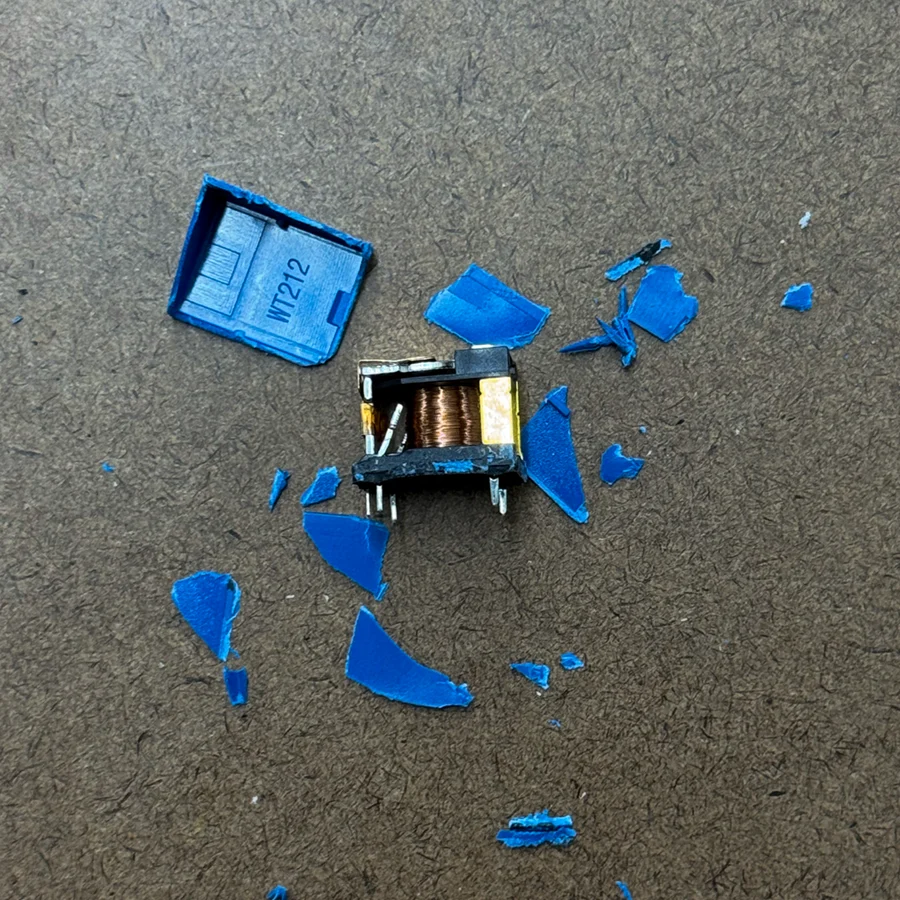
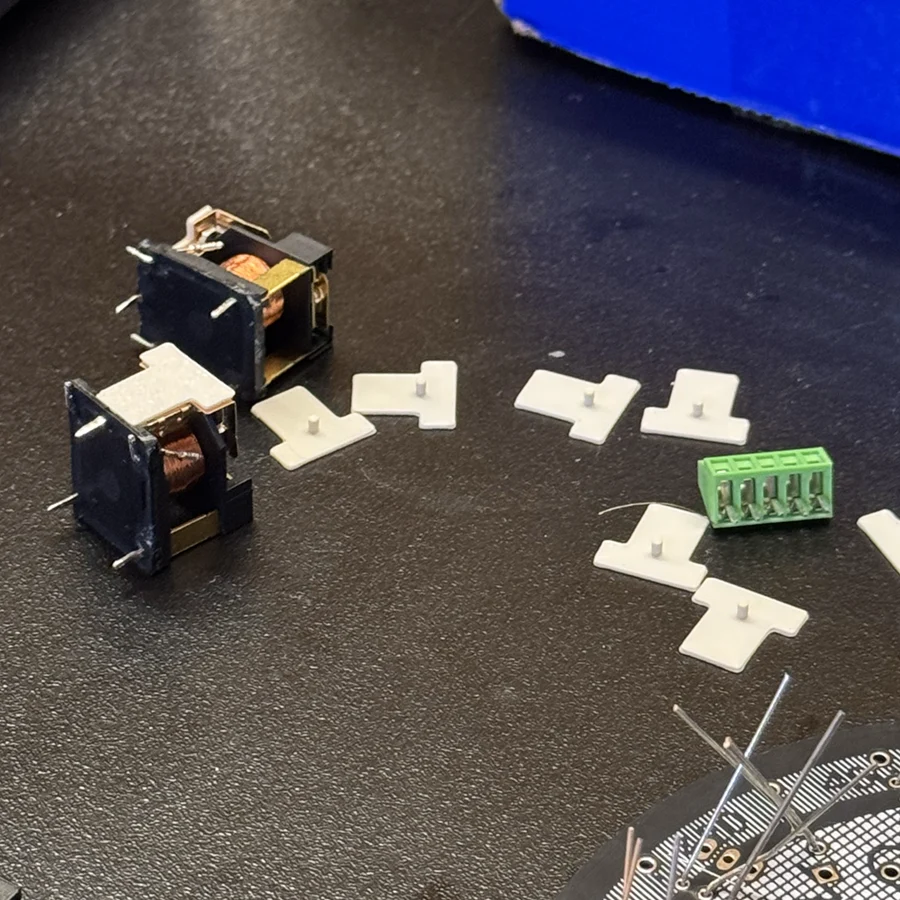
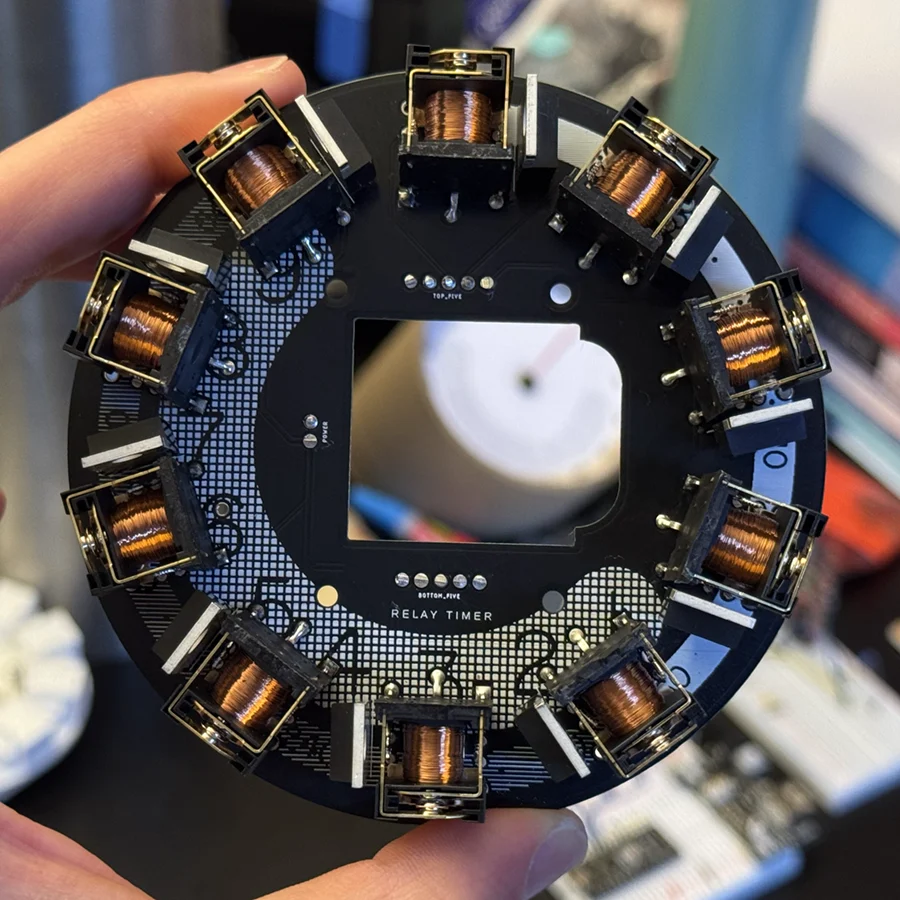
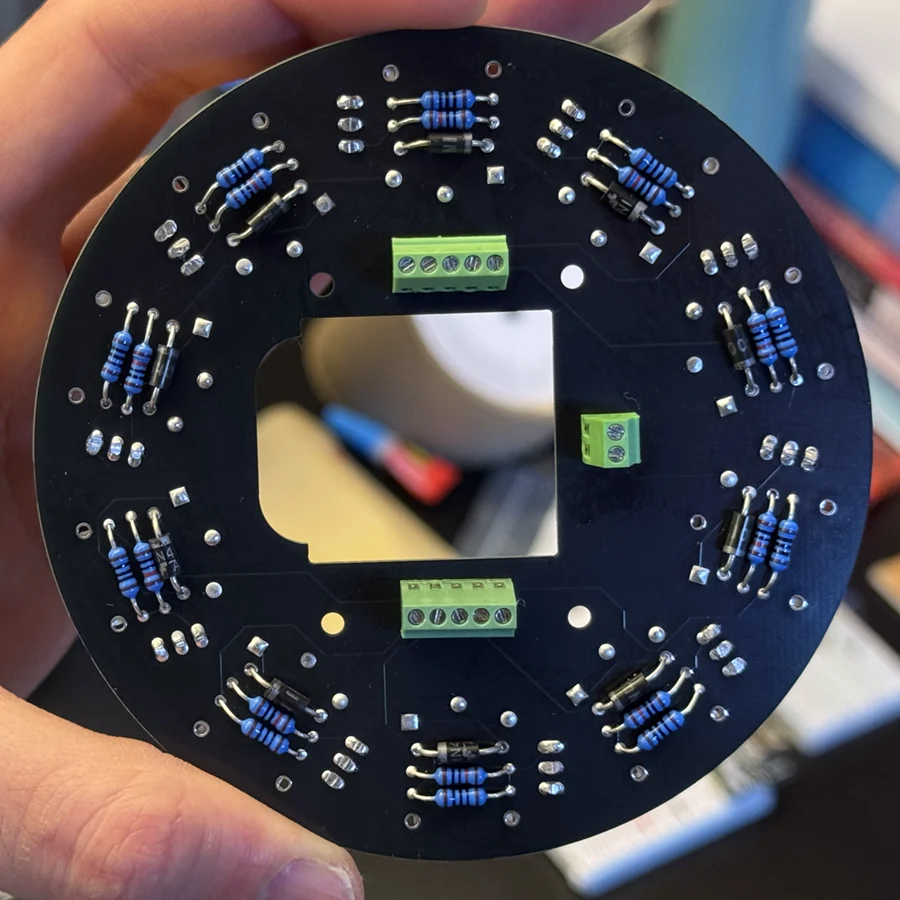
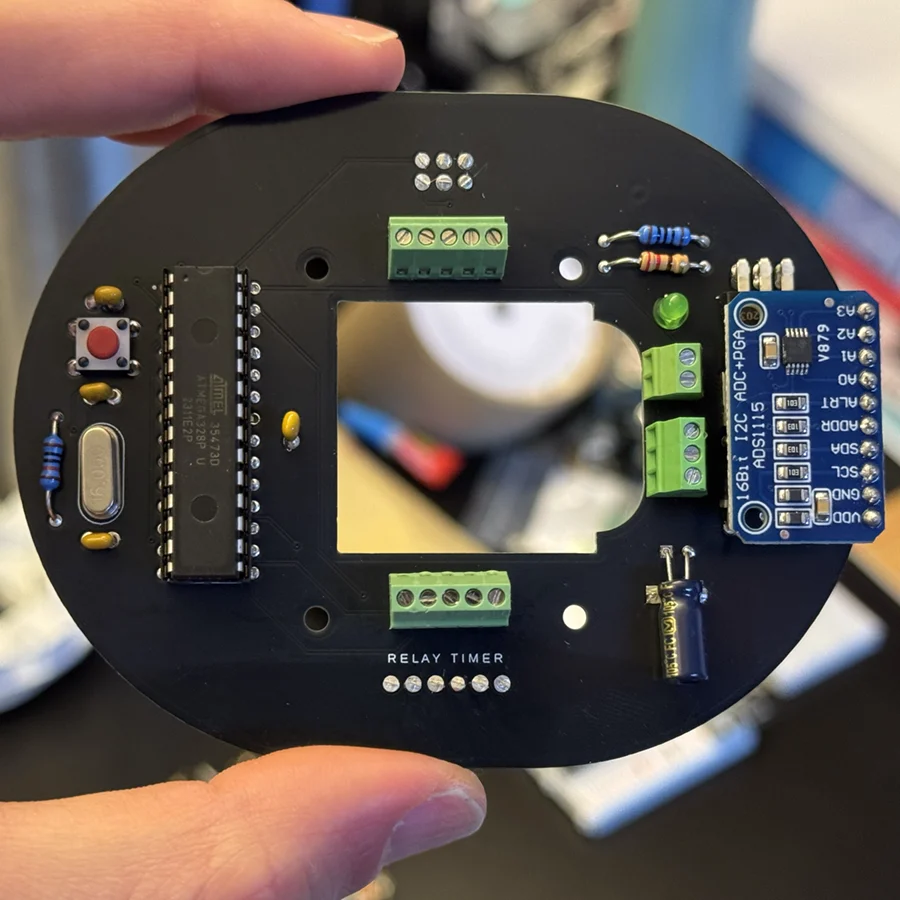
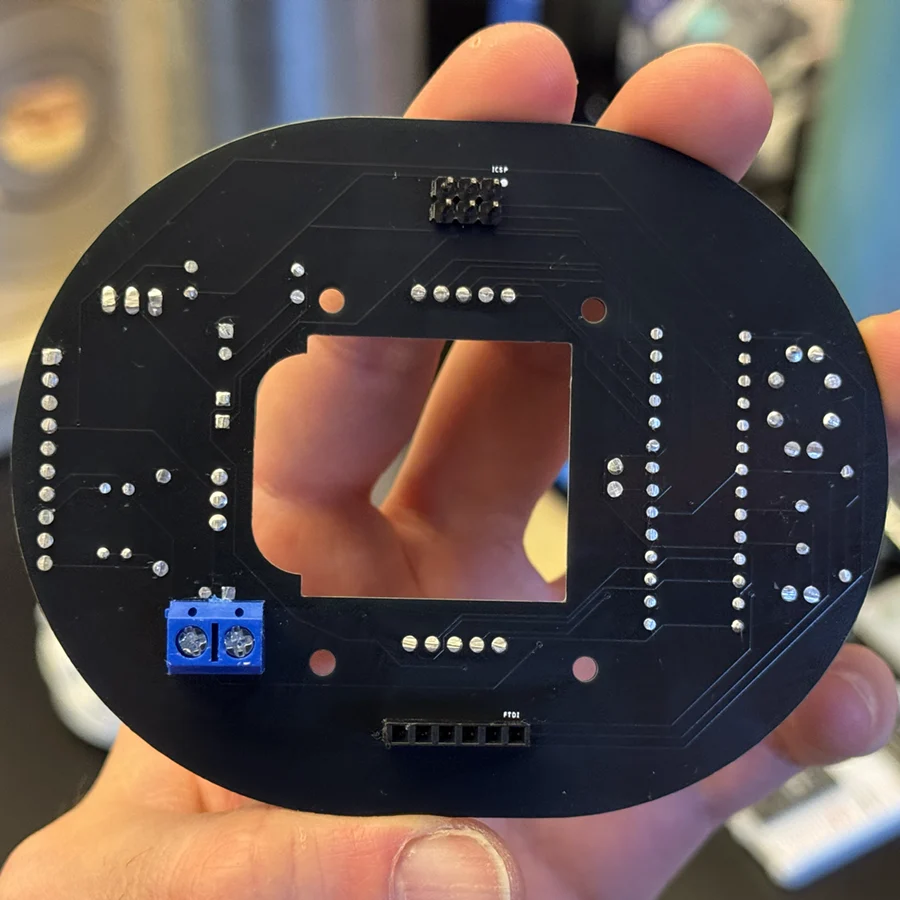
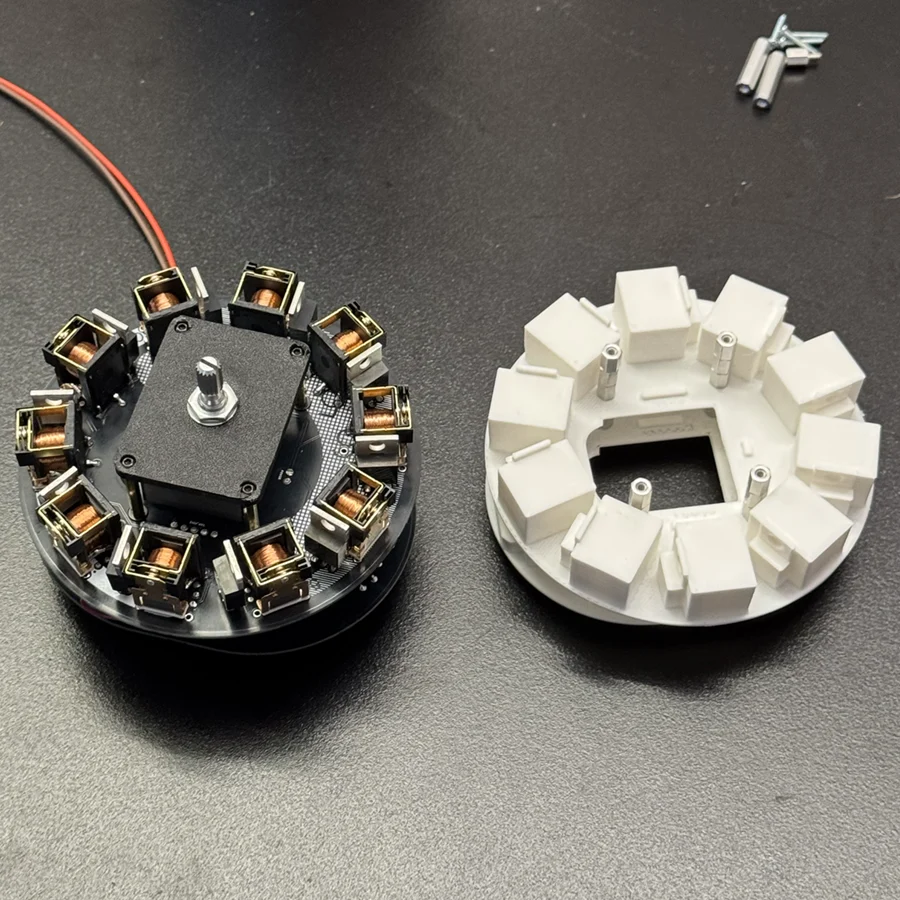
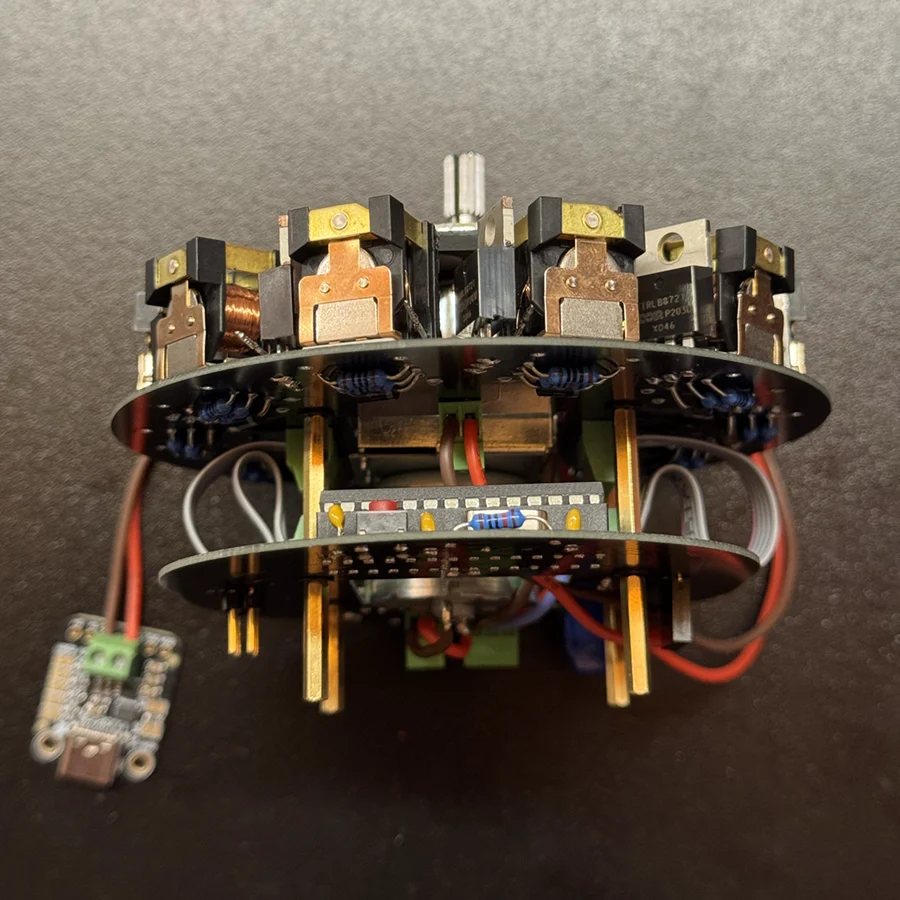
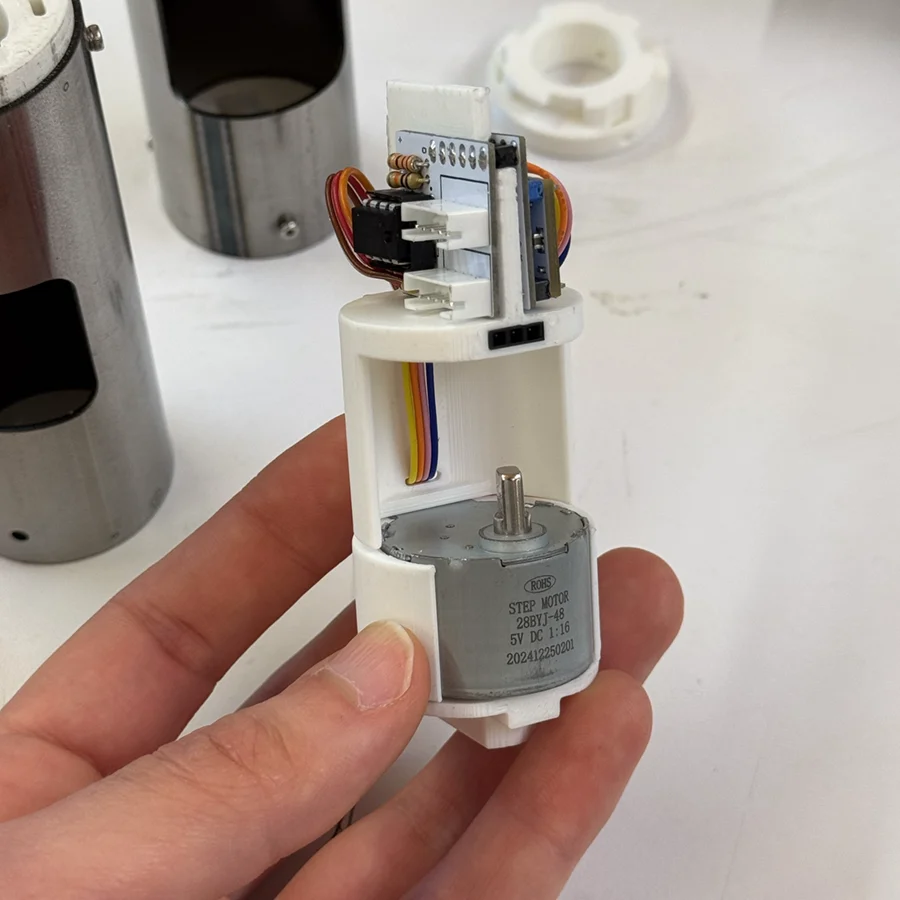
The side look at the fully assembled electronics. The potentiometer in the center is a motorized rotary potentiometer that would serve both as input and output.
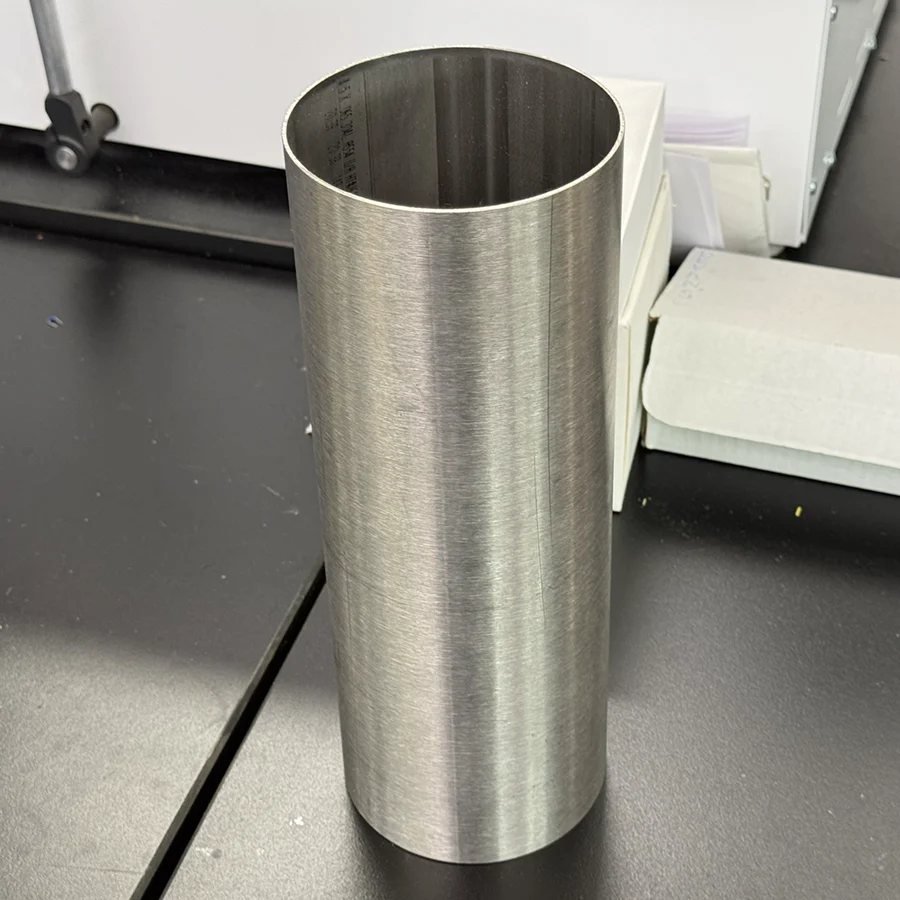
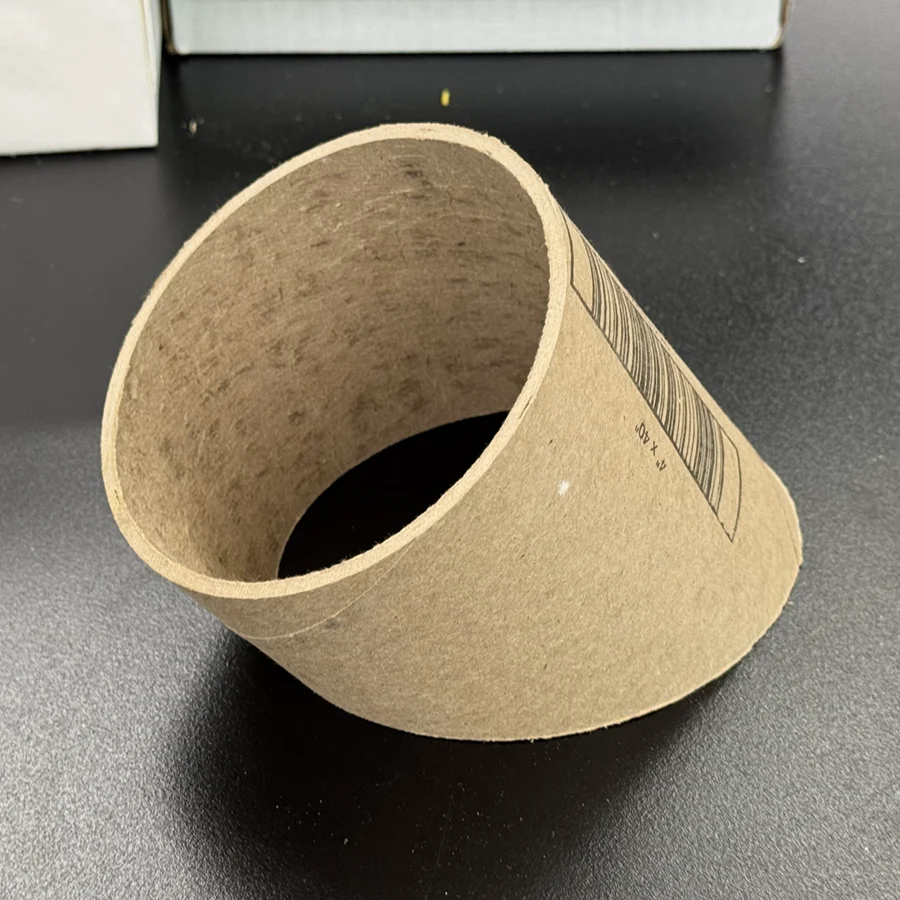
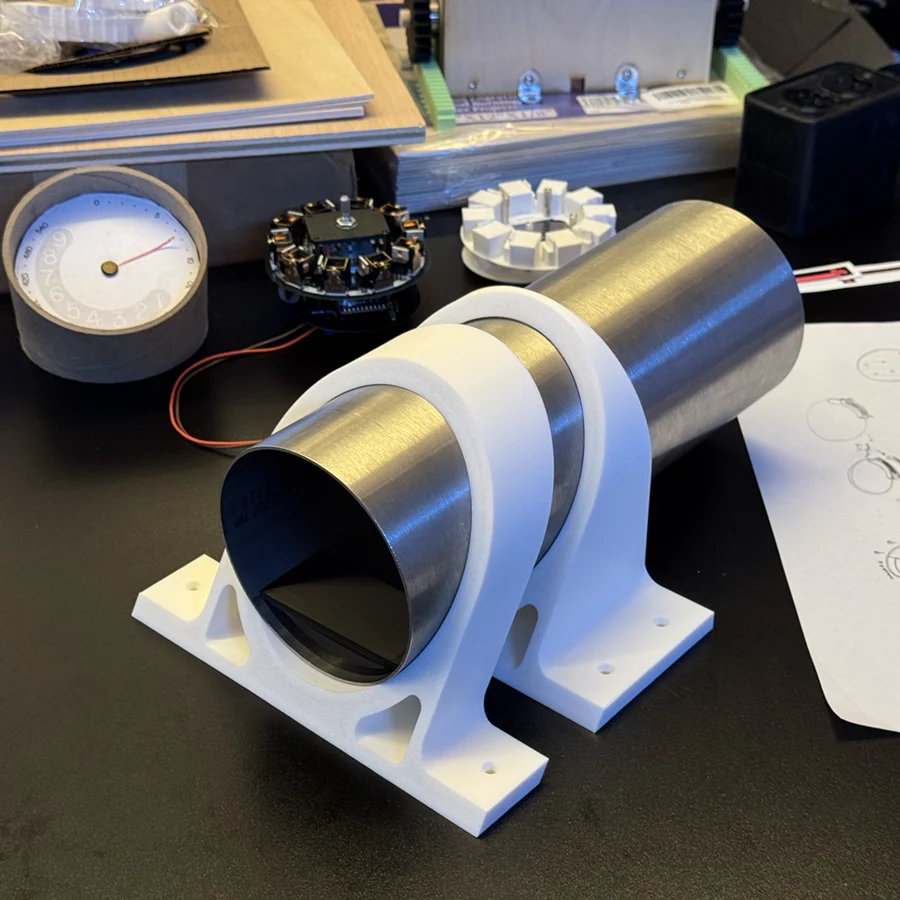
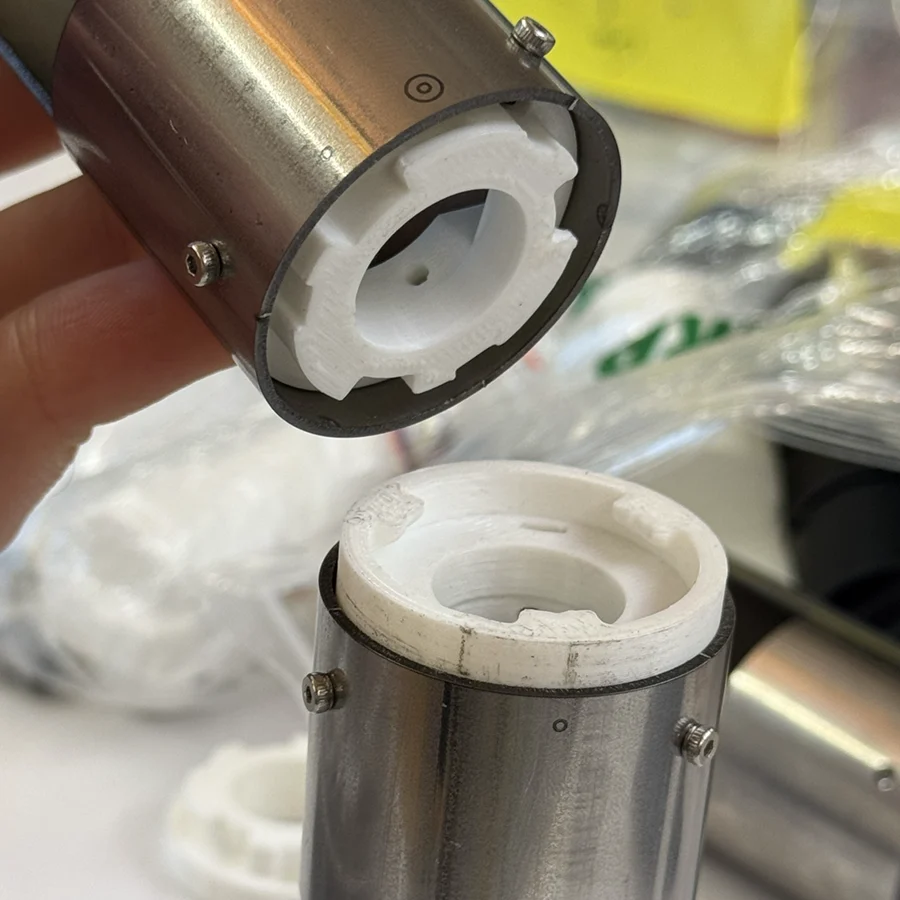
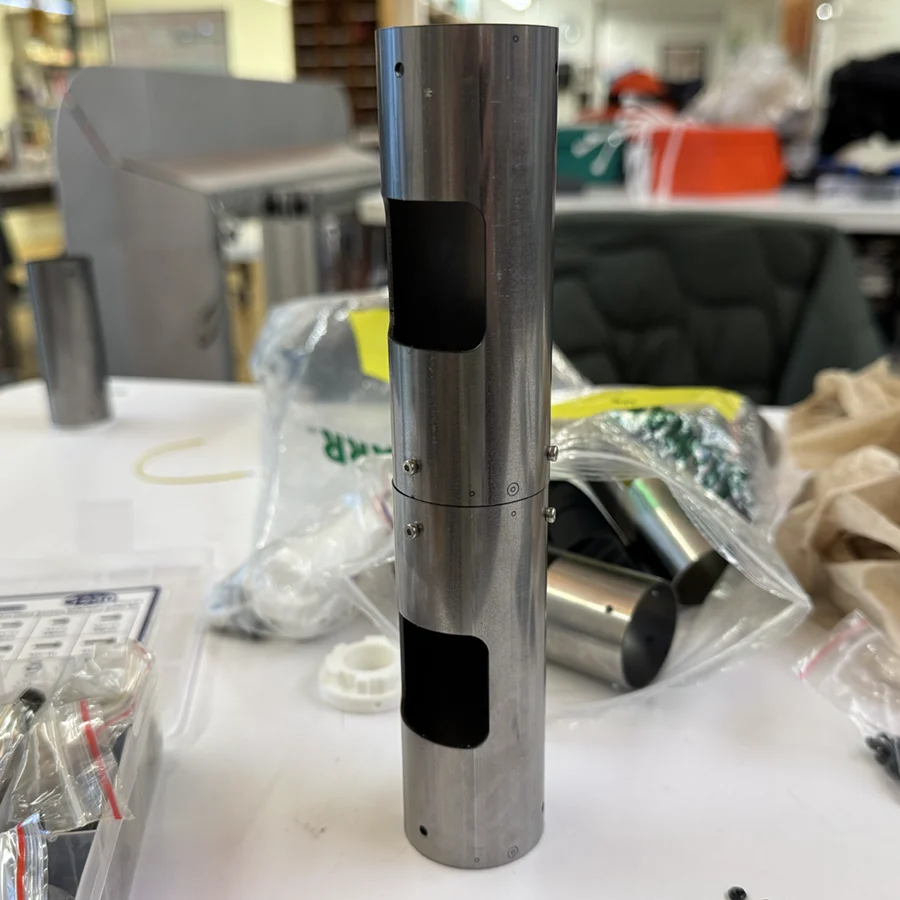
For the enclosure, I got this piece of exhaust pipe that was the right diameter.
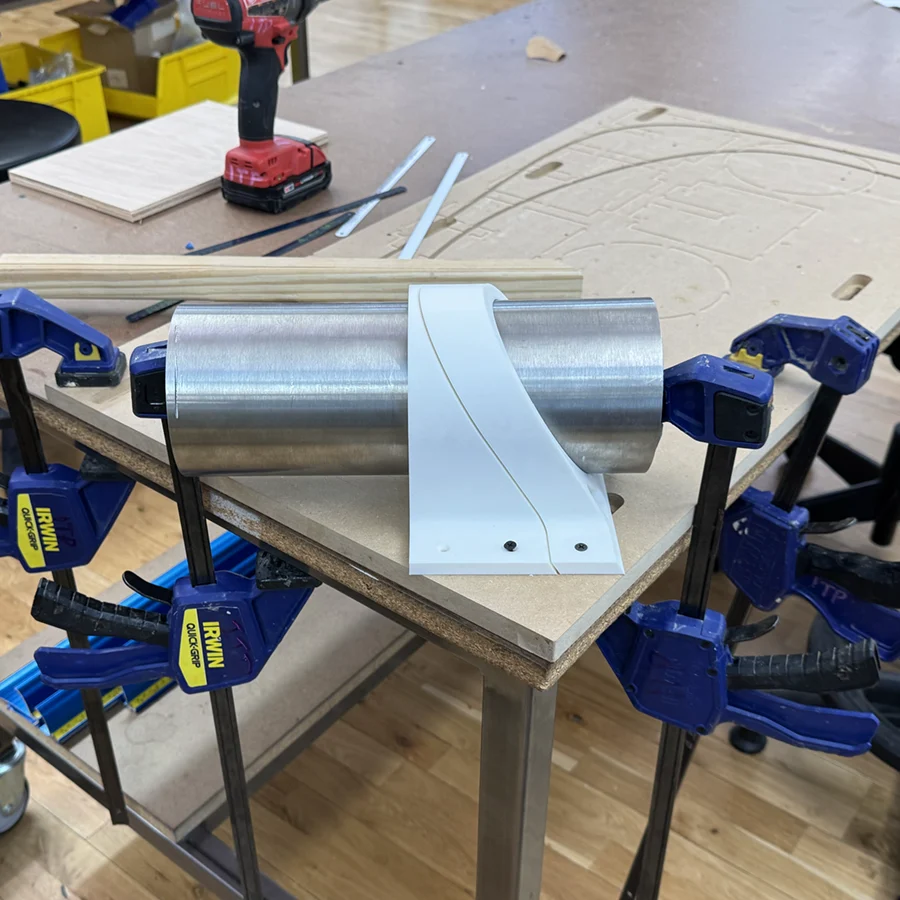
I made a jig for the angled cut, to cut it by hand with a hacksaw since we don't have any special tools that could do this cut at ITP. It ended up not working all that well.
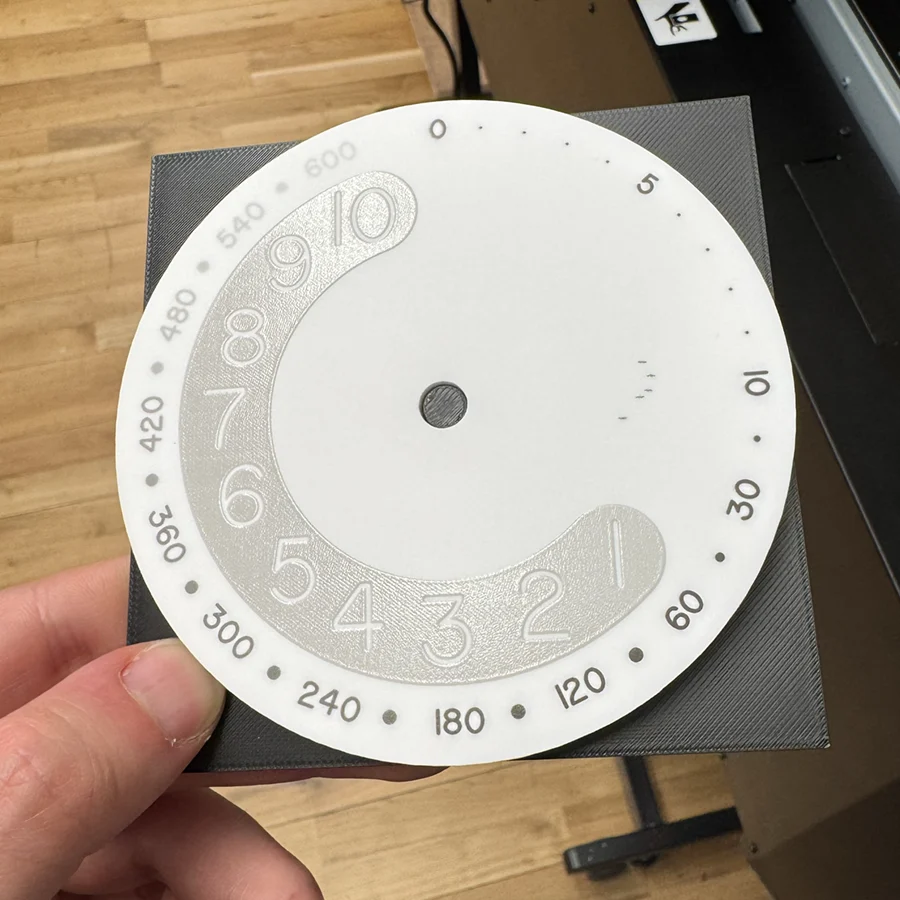
I also designed and UV printed this face for the timer, which had a few odd lines left by the printer on it. Nonetheless, this was a prototype as the final one is meant to have a window to look at the relays inside.
I'm very happy with the progress on this piece, my next steps are:
- Composing the relay chimes: For this I'd like to work with a composer friend, who could make chimes not only for when the alarm is up but also start-up, timer start acknowledgment and maybe clicks in the middle of the operation.
- Iterating on the enclosure: The next idea is to have the enclosure tube laser cut by an external provider. This will allow more precise cuts and also the addition of tabs on the bottom for mounting.
- Iterating the timer face: I'd like to try to mill the face off of a medium thickness aluminum sheet. I think it could give a better and more interesting finish than the plasticy feel from the acrylic and UV print.
Vane
As a proposal for my final, I decided to keep working on my project development project from the previous semester:
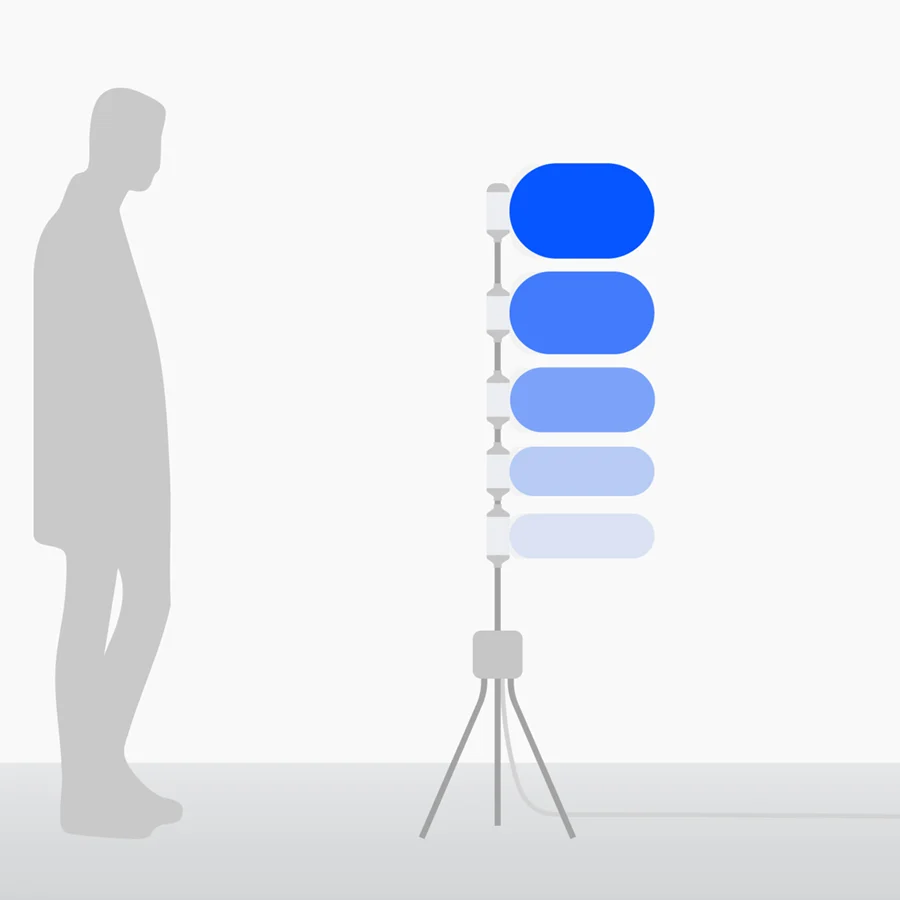
This piece is a kinetic furniture that reacts and visualizes local winds. The first vane aligns to wind direction in real time while each subsequent vane shows the wind direction delayed by 10, 20, 30 and 40 minutes respectively. Through this, it shows local weather through wind patterns in time.
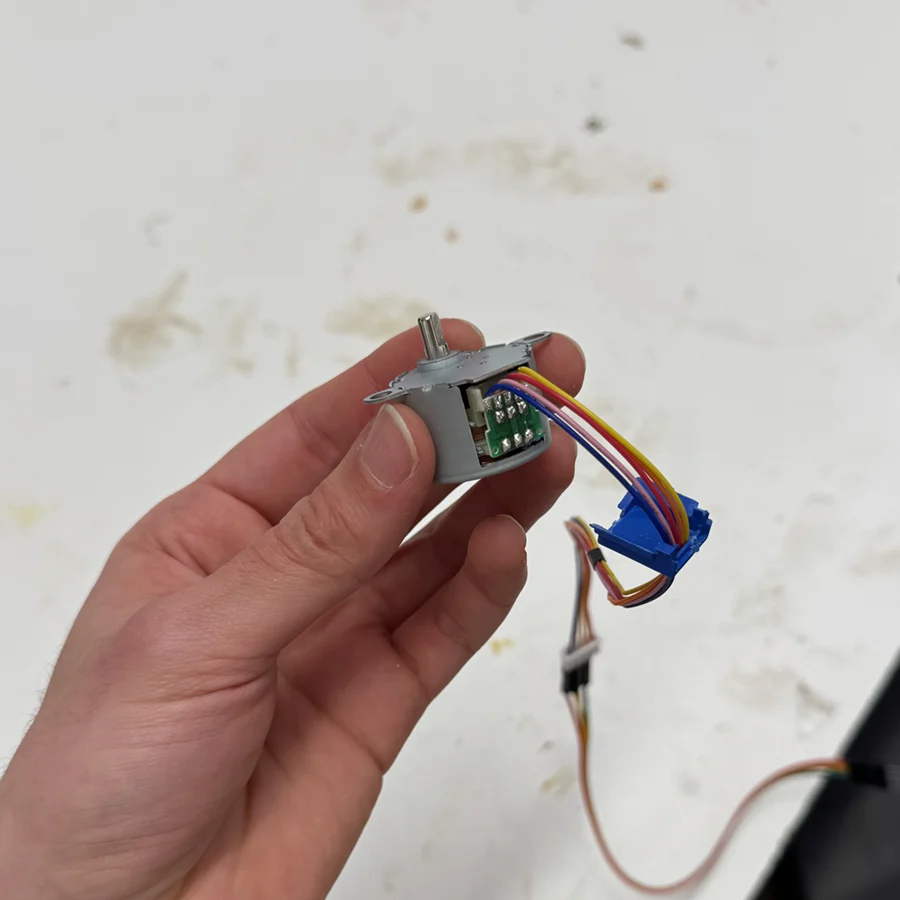
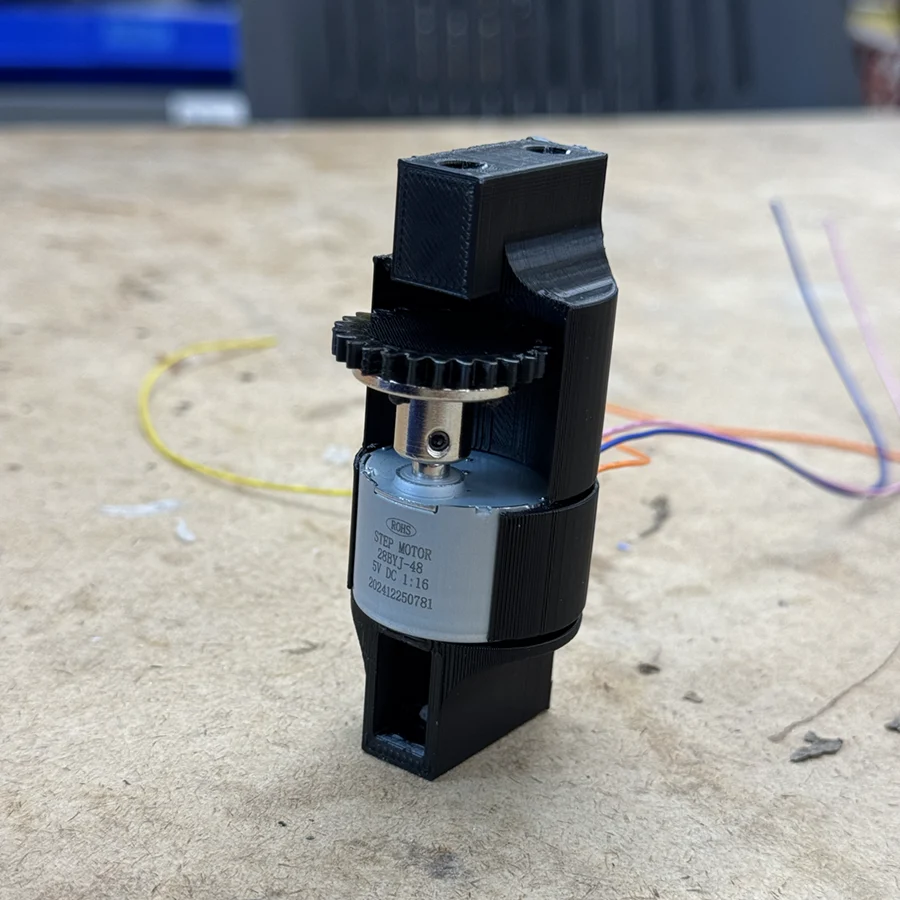
The project started with a lot of research in motion and steppers.
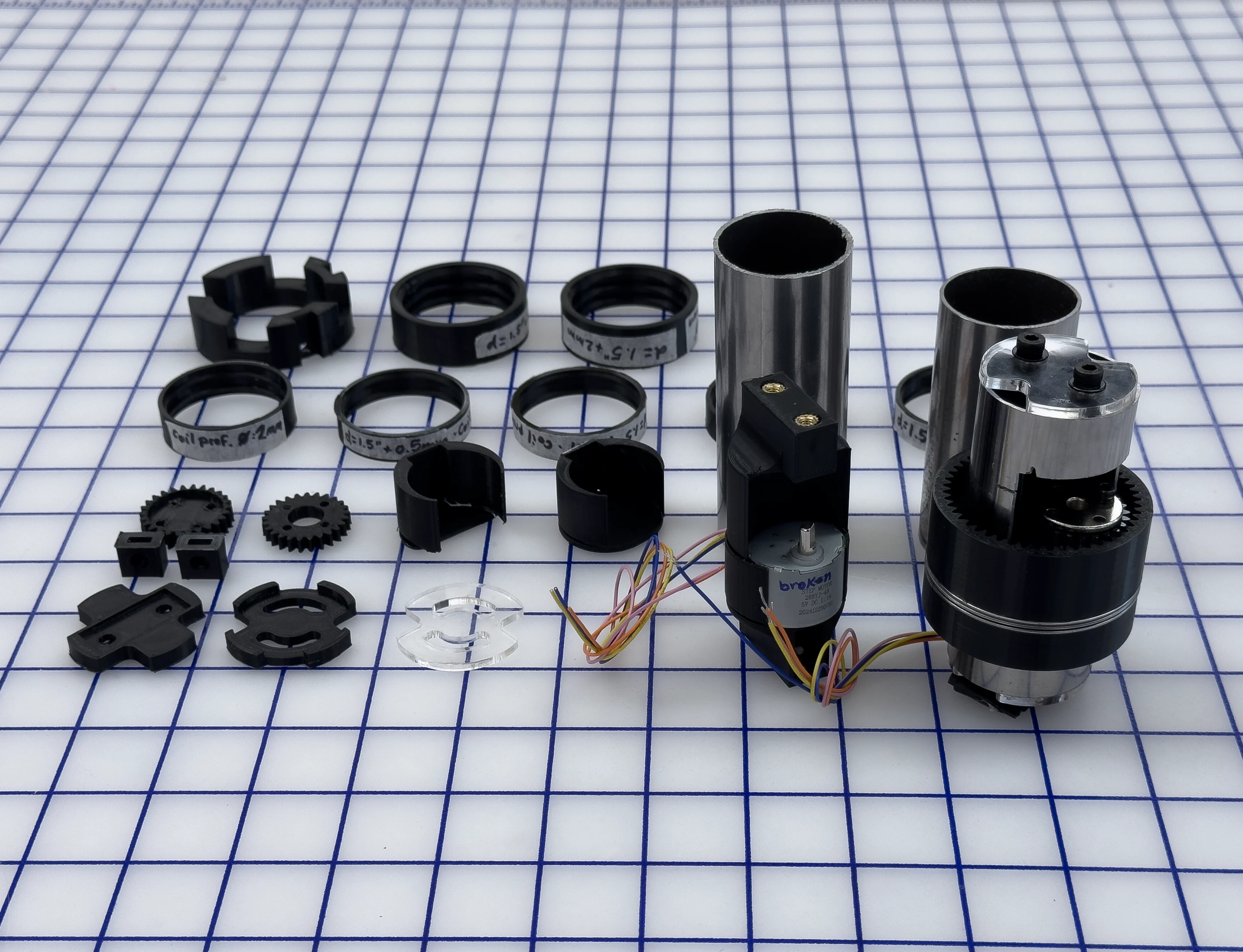
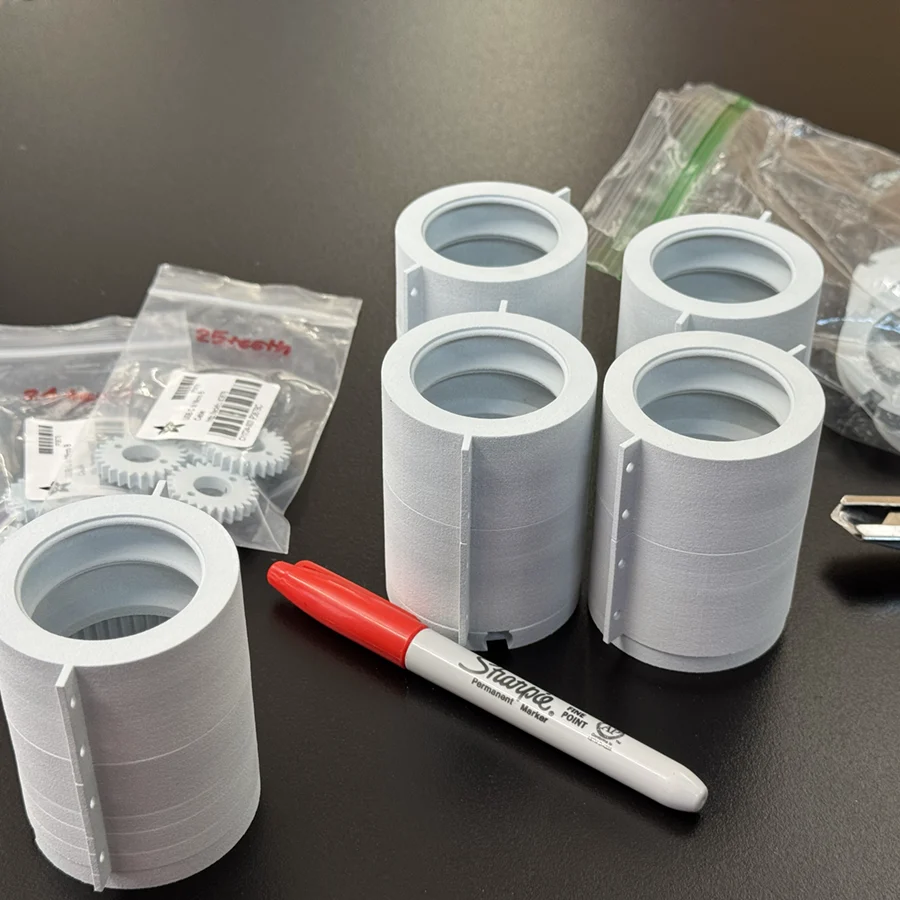
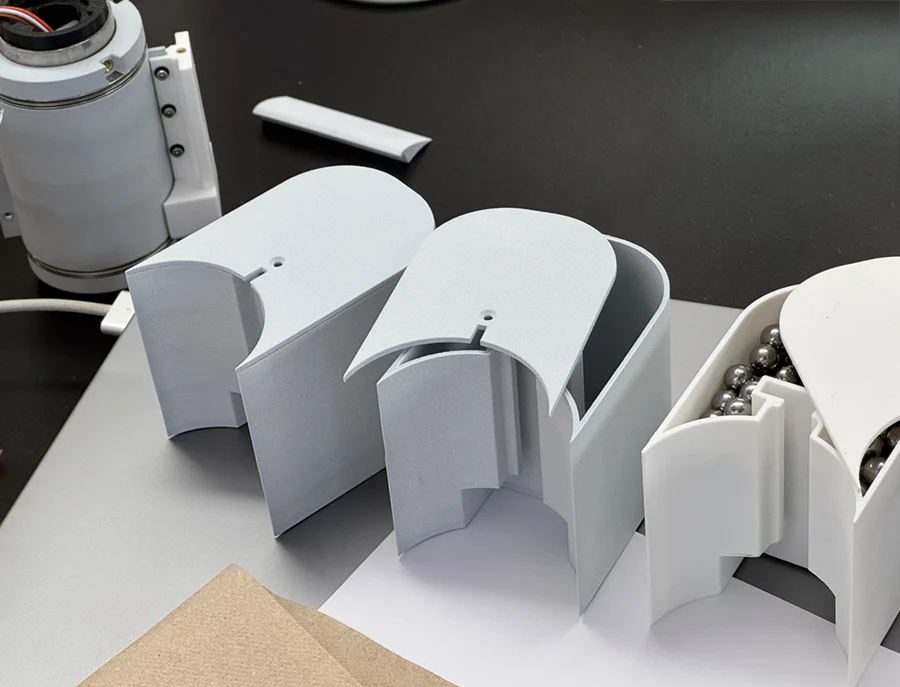
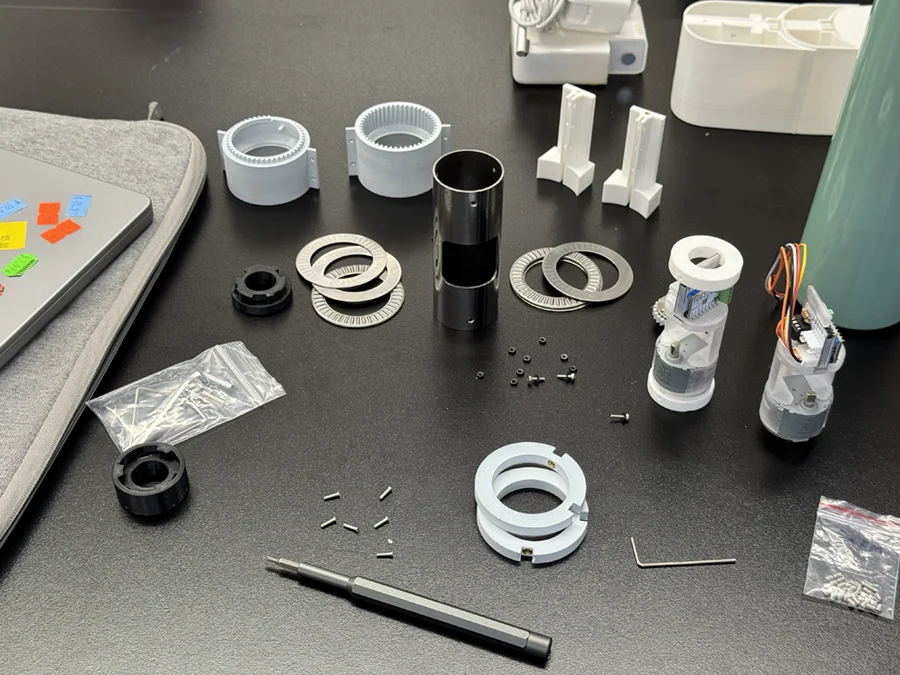
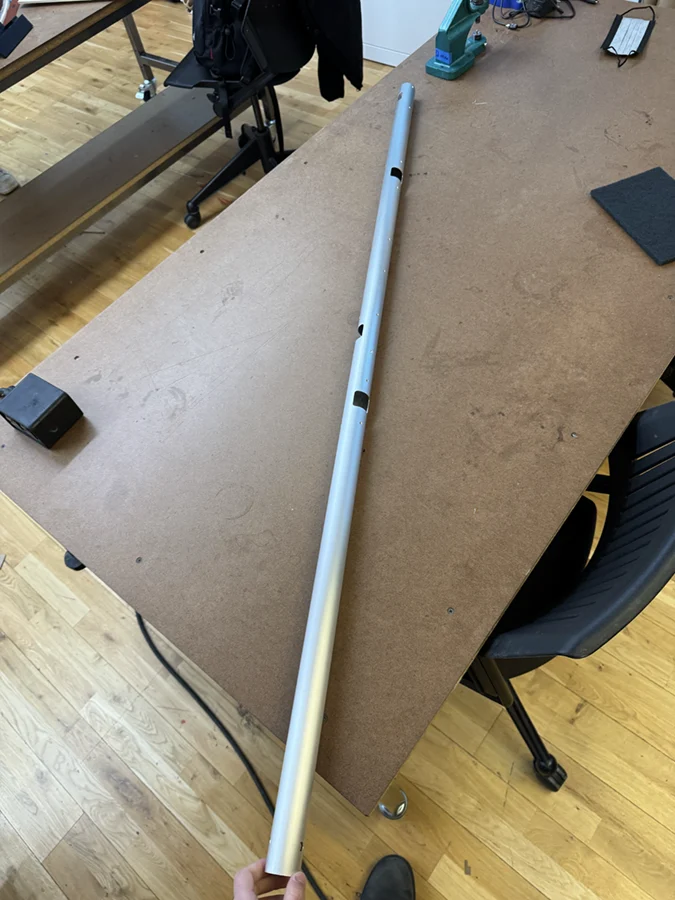
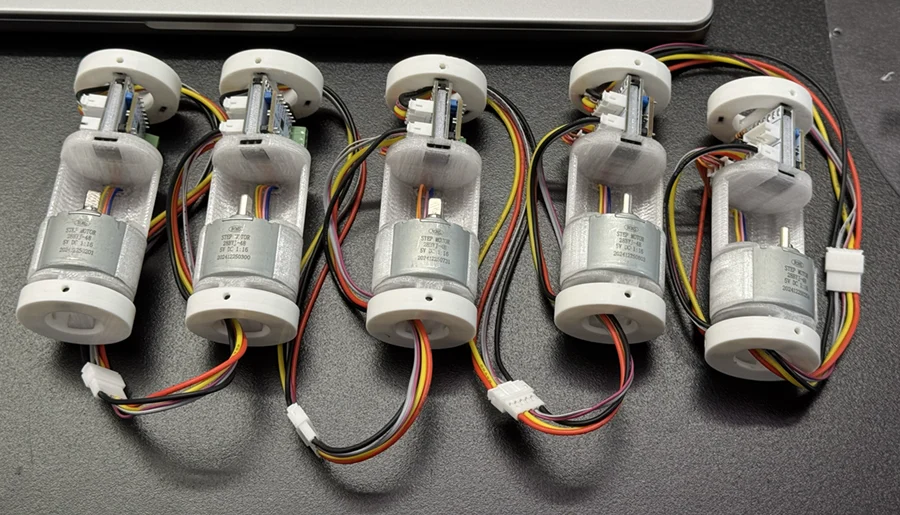
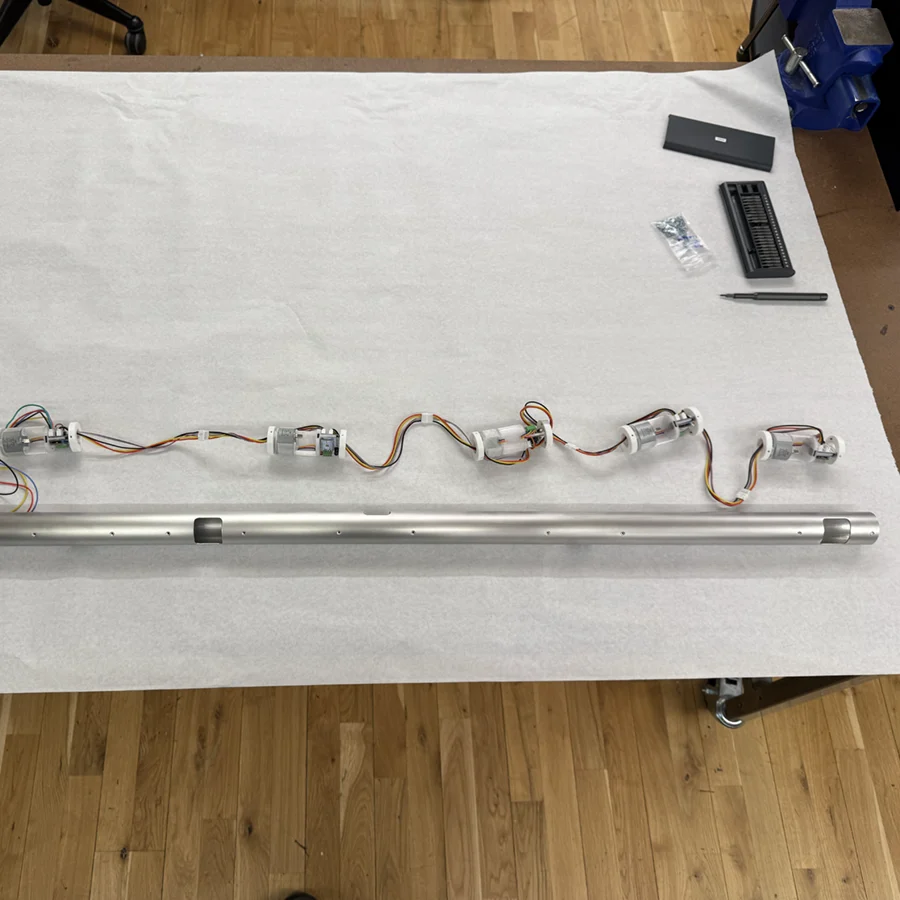
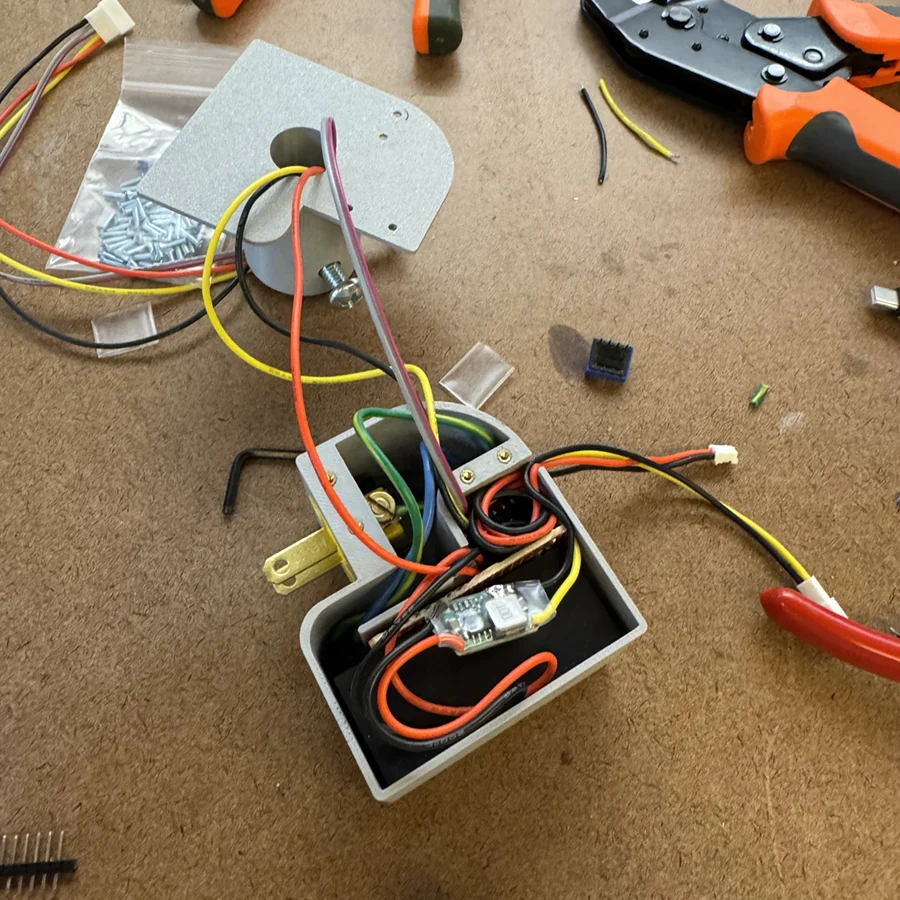
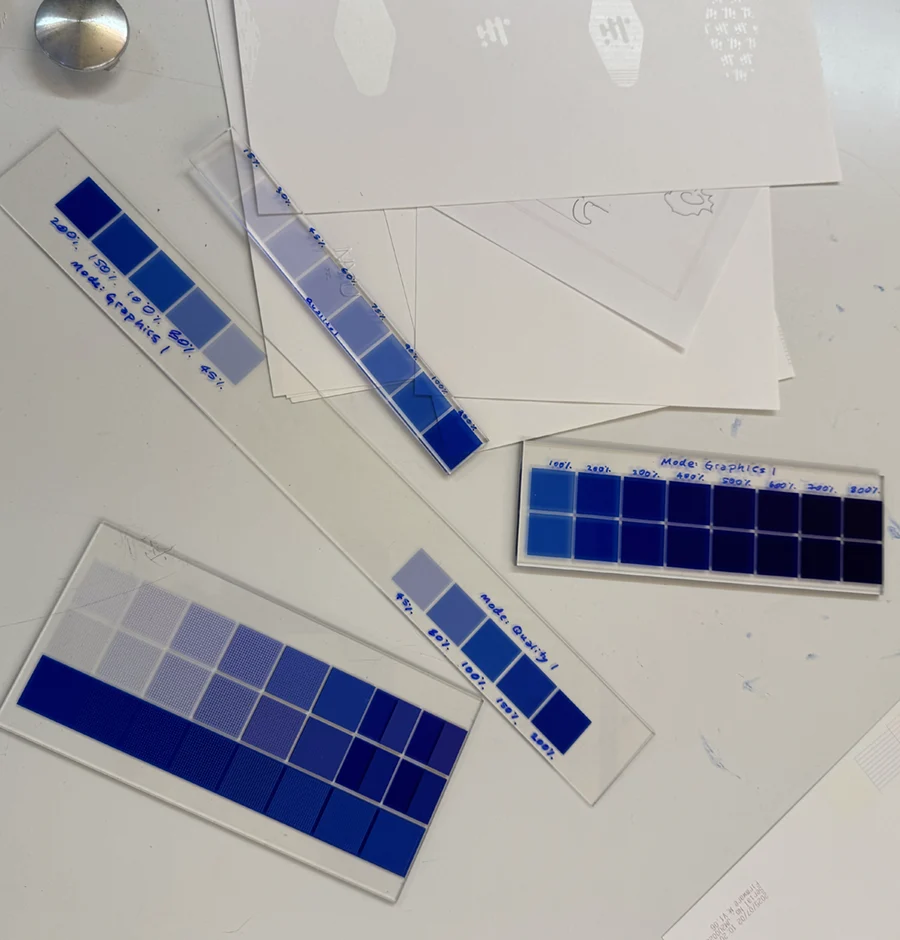
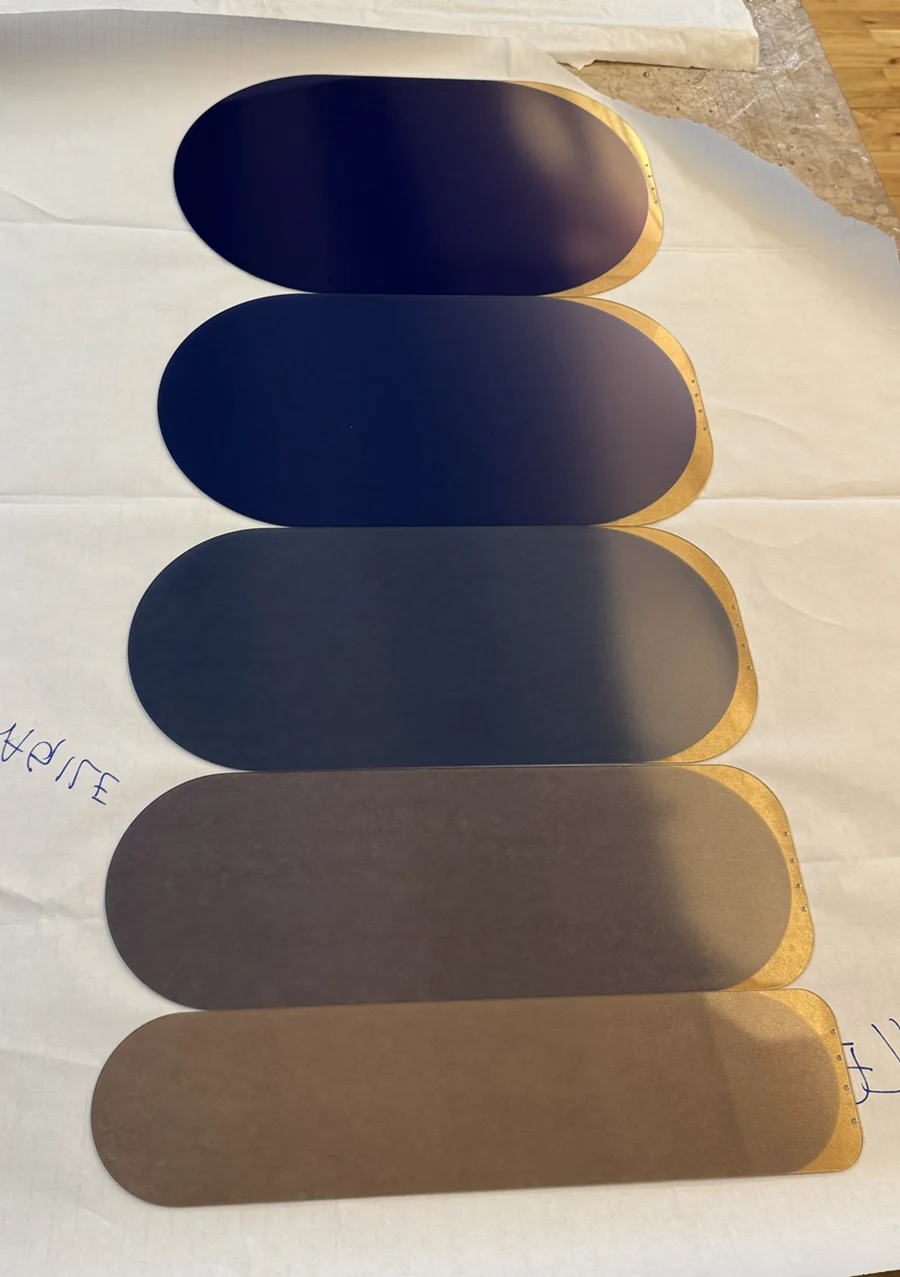
In parallel, I worked on the vanes and how to color them effectively, so as to use opacity as a 'trail'.
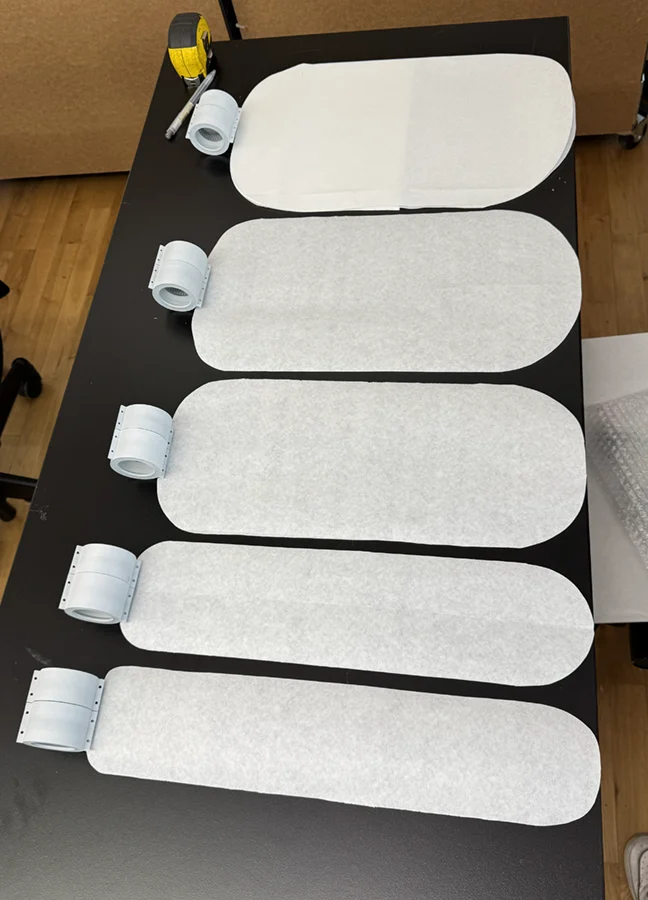
Week 05 Watchface and Design
For this week's assignment, I immediately thought of the Otsuka Lotec N. 06:
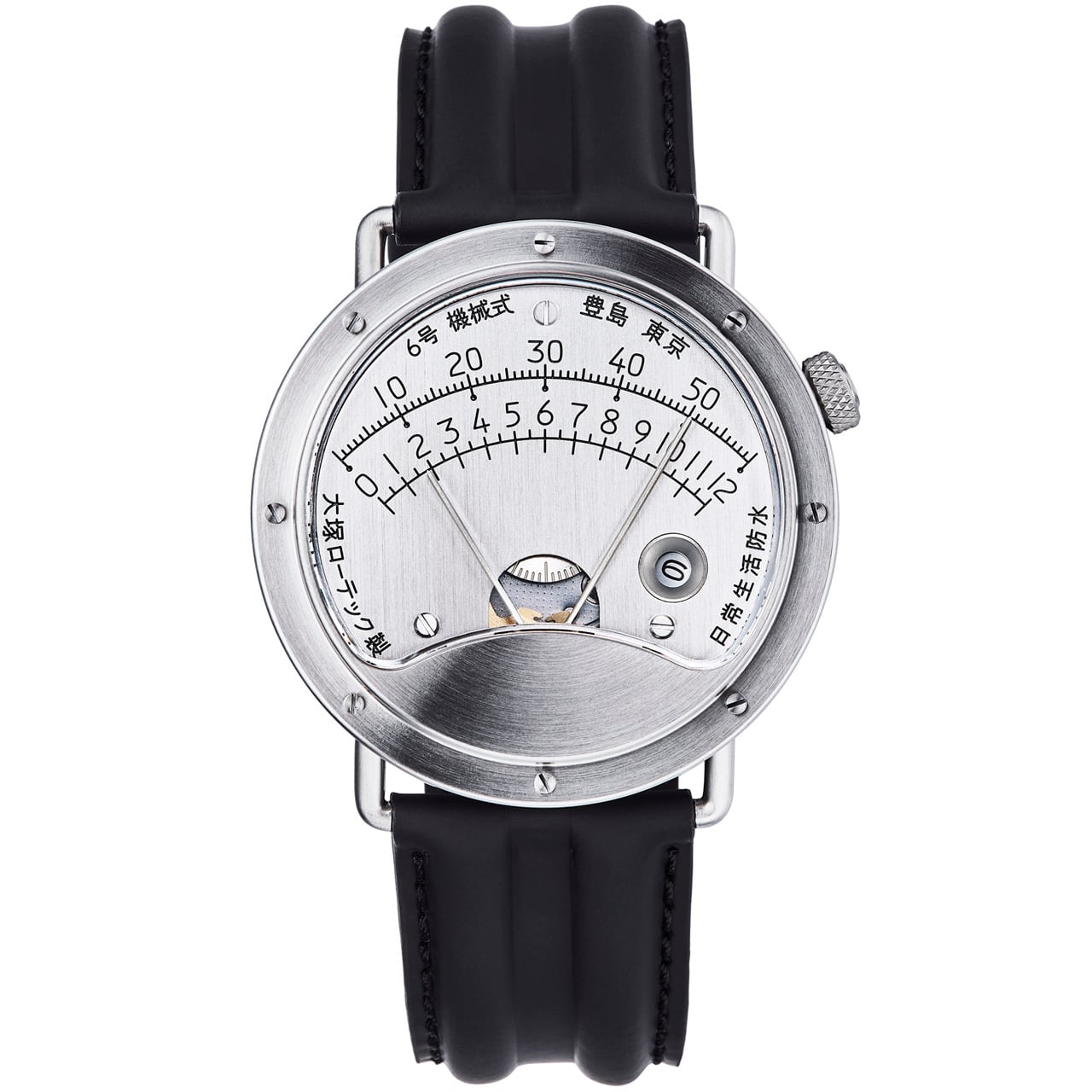
The movement of the arms is what captivates me the most. The idea that the arm falls back to zero on the left (and having a "0" on the watch) is mesmerizing to me. It also gives off this visual of a spedometer, feels like your day is ramping up and then once the hour is over, goes back down to zero. Like revolutions when you shift gears.
I decided to remake the watchface on illustrator.
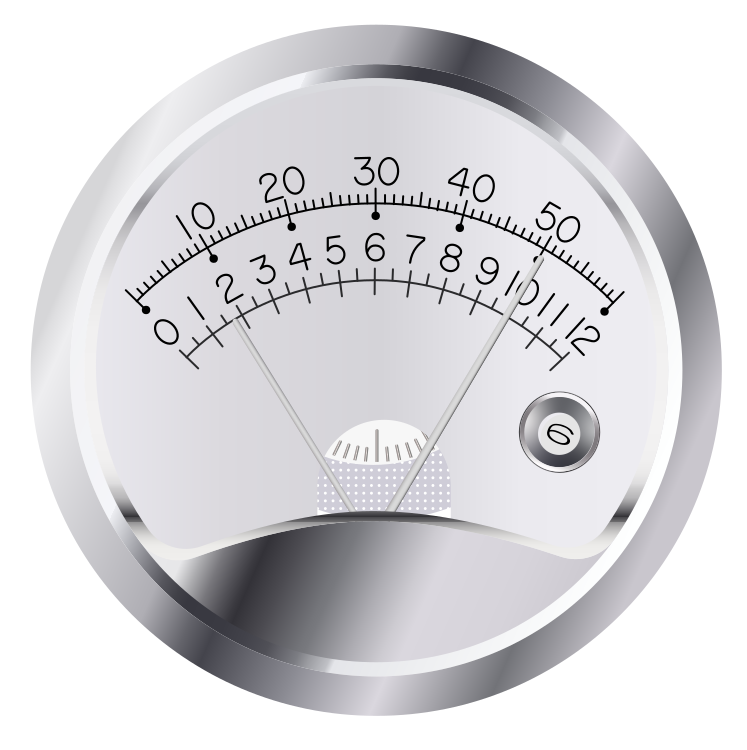
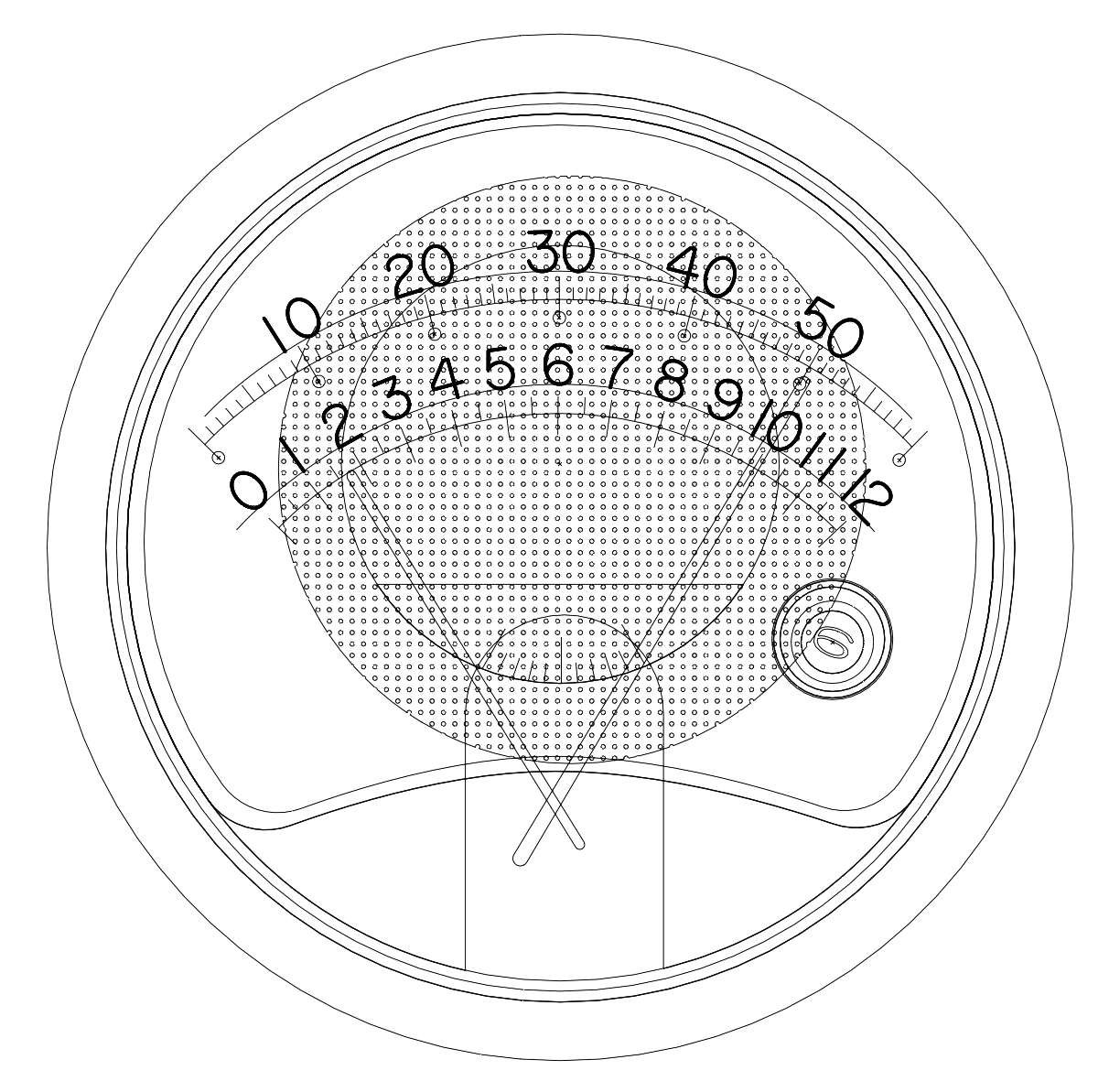
This was pretty fun to make. For the font, I recognized the style of the typeface on the watch being like the machined typefaces described in this article about Gorton. I looked for a few, like Routed Gothic but ended up going for Gorton Digital, as the light variant was the closest to the design on the watch.
Week 04 Software Clock
For my software clock, I kept thinking about the way timezones are defined by longitudes, which are an interesting way to slice the Earth. I don't think we usually feel a particular connection with other in our same longitude, atleast not those far north/south.
Looking it up, in reality the timezones are way more complicated than that unfortunately. The sun is not the main player in determining times. Politics and society play a big role:

I find this particularly interesting on a personal level because Bogotá, the city where I've lived a good portion of my life, and New York City share longitudes.
So I decided to make a clock that would make these linear connections explicit, by showing you your microtimezone and the time on it: Normally, in UTC time, 1 hour is equivalent to 15º of separation in longitude. Therefore, we are more or less (not in all cases) grouped into 15º chunks and assigned the same time for the whole slice.
However, if 15º is 1 hour, this means that 0.00416667º is 1 second. This logic splits the earth in ~86,400 ultra accurate timezones. This is what my software clock does: it shows you the time in your current microtimezone, detected through GPS.
(The clock will not work well without permission to access GPS). You can access it online here and see the code on github.
Week 03 Hardware Clock
For this weeks assignment, I wanted to experiment with mechanical relays. To me, their ticking sound and movement is very similar to the escapement mechanism that drives mechanical clocks.
The clock I built has 5 sound "dials", each one activated on a different interval, but all multiples of 200ms, as can be seen in the code:
const int numPins = 5;
const int pins[numPins] = {3, 4, 5, 6, 7};
int state[numPins] = {HIGH, HIGH, HIGH, HIGH, HIGH};
unsigned long last[numPins] = {0, 0, 0, 0, 0,};
int interval[numPins] = {200, 400, 600, 800, 1000};

void setup() {
  for (int i = 0; i < numPins; i++) {
    pinMode(pins[i], OUTPUT);
  }
}

void loop() {
  for (int i = 0; i < numPins; i++) {
    if (millis() - last[i] > interval[i]) {
      last[i] = millis();
      state[i] = state[i] == HIGH ? LOW : HIGH;
      digitalWrite(pins[i], state[i]);
    }
  }

}
However, as heard in the video, these relays fall out of sync. I imagined I would be able to hear them ticking at the same time, just some of them would "chime in" less frequently than others. Nonetheless, as time passes, they fall further and further out of sync.
I imagine this is due to the speed of the armature not being fast enough to 'hit' right on the beat.
But I also wonder if my code is slowly compounding a distance between them through the
last value for each one, causing them to drift apart over time. This drifting apart is
to me a very beautiful phenomenon, especially because, for short moments, they come back in sync.
Week 02 The Inconstant Moon, Hardware and Patterns
Dendrochronology
Thinking about a natural pattern that had special meaning for me, I was brought back to a qualm I usually have with woodworking. Despite how much I enjoy it, it feels like whatever I make has to be grand enough to have warranted the tree's contribution. And even then, I feel only certain masterpieces achieve that.
This definitely has to do with the age of trees and the fact that they can easily outlive us. So I decided to focus on the age of trees and the way they record their time through their rings. This, I came to find out, is called dendrochronology and it is paired with dendroclimatology as the rings not only keep track of years, but also provide hints as to the climate of each year.
Each ring consists of a paler lighter section (spring and early summer wood) and a darker denser section (late summer and fall wood). Generally, a ring can be thought of as a year (although under stress this is not always the case).
I came across a great public dataset of dendrochronology named Urudendro, including images of yellow pines from the north of Uruguay. I built a small code sketch that would simulate a timelapse of their rings and allow us to see how they grew and the time they kept. The original sketch has the whole 64 trees, but this video excerpt shows just three:
Notes on The Inconstant Moon
- Our experience of life and time was so intertwined with the celestial bodies, that it seems unbelievable how we have completely abstracted time from them.
- It feels to me that mechanical clocks act like a microcosm of the orbits/rotations of celestial bodies. They're like having a realtime link to the sky on our wrists.
- The religious link with timekeeping makes sense. In spanish the word for 'Sky' and 'Heaven' is one and the same: 'Cielo'. Therefore, it is clear how our spirituality has been linked with the cosmos and timekeeping can be, in a way, keeping track of the heavens.
Notes on Moore's Wall and Singularity
- Last year I attended a lecture by Tandon Dean Juan de Pablo on his research in developing methods for the reliable construction of integrated circuits with microscopic circuits inside. It was fascinating to see and also daunting to consider how humanity has pushed the limits of their senses to advance technology.
- I used to have the feeling that Moore's law was plateauing. That we were reaching some diminishing returns. However, with the prevalence of machine learning, it feels the speed at which we move has multiplied. Sometimes feels too fast for our senses, in the same way as the previous point.
- The idea of the singularity as described in most of the chapter relies too heavily on science fiction. The idea of an unforeseen property of the internet "suddenly awakening" makes it sound as if the internet was a mythological beast. This sort of rhetoric just feels fatalistic.
- Some aspects however are interesting, like the idea of loosing the ability of prediction because of speed. How prediction is rooted on observation and analysis of repetitions, and how this practice might become impossible if less iterations happen on the way to the future. Unknowability then feels like a real possibility.
Week 01 Readings and Sundial
Sundial
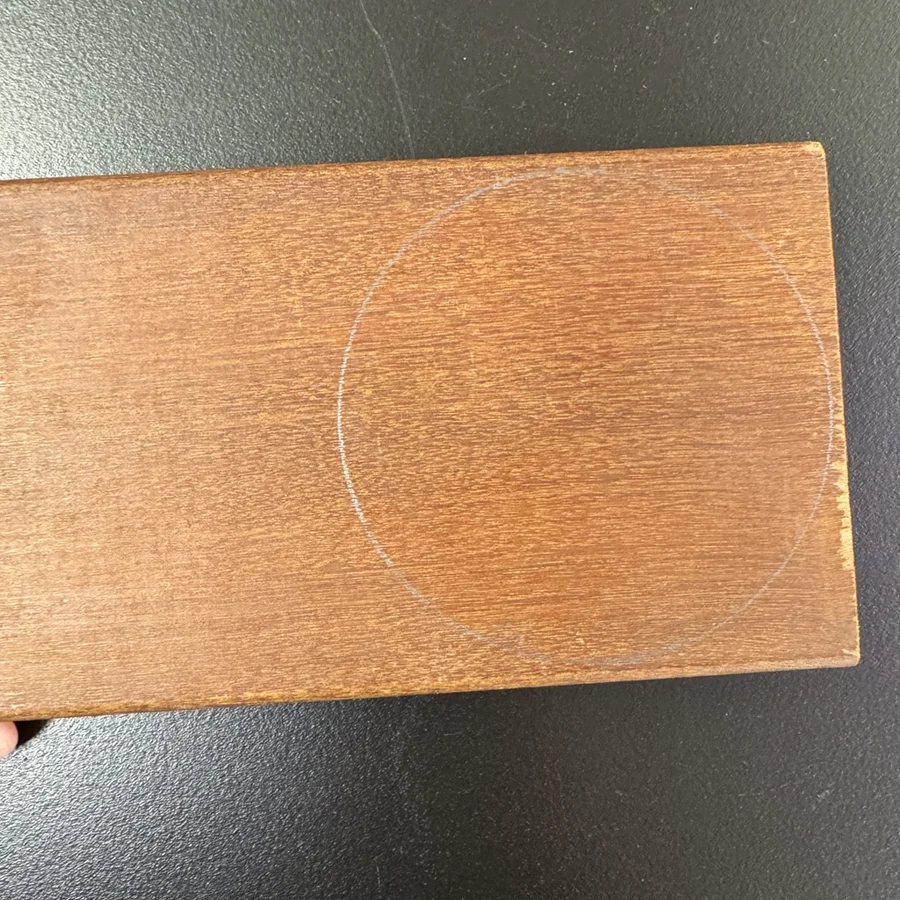
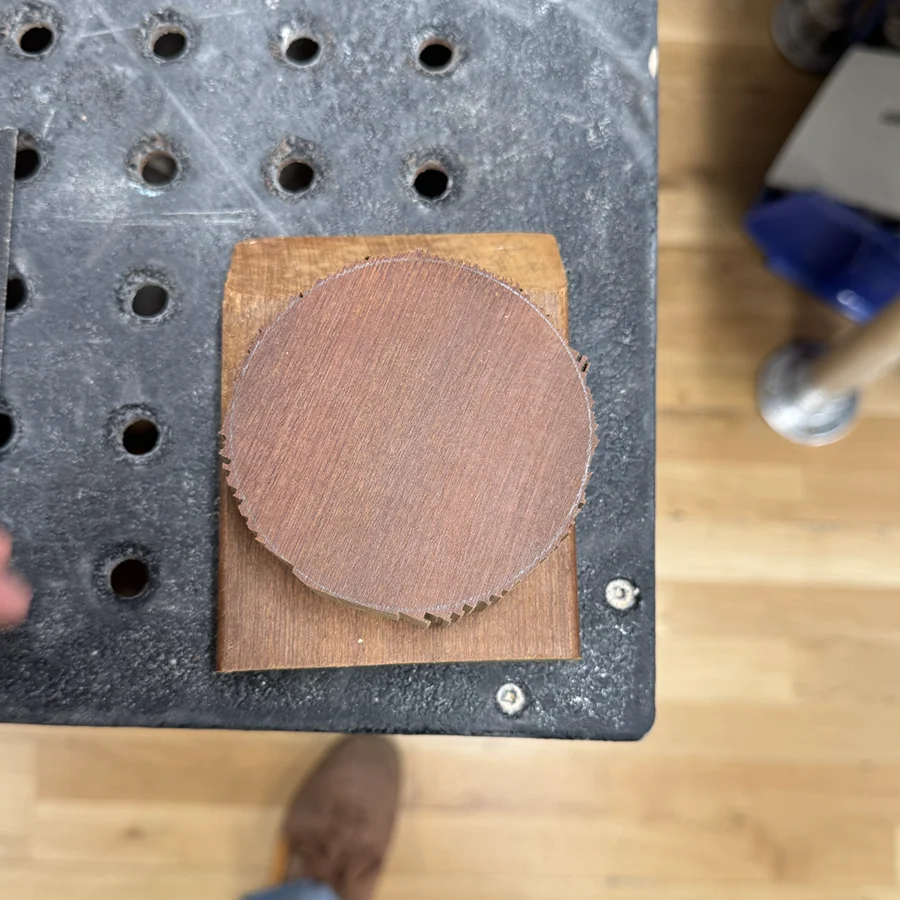
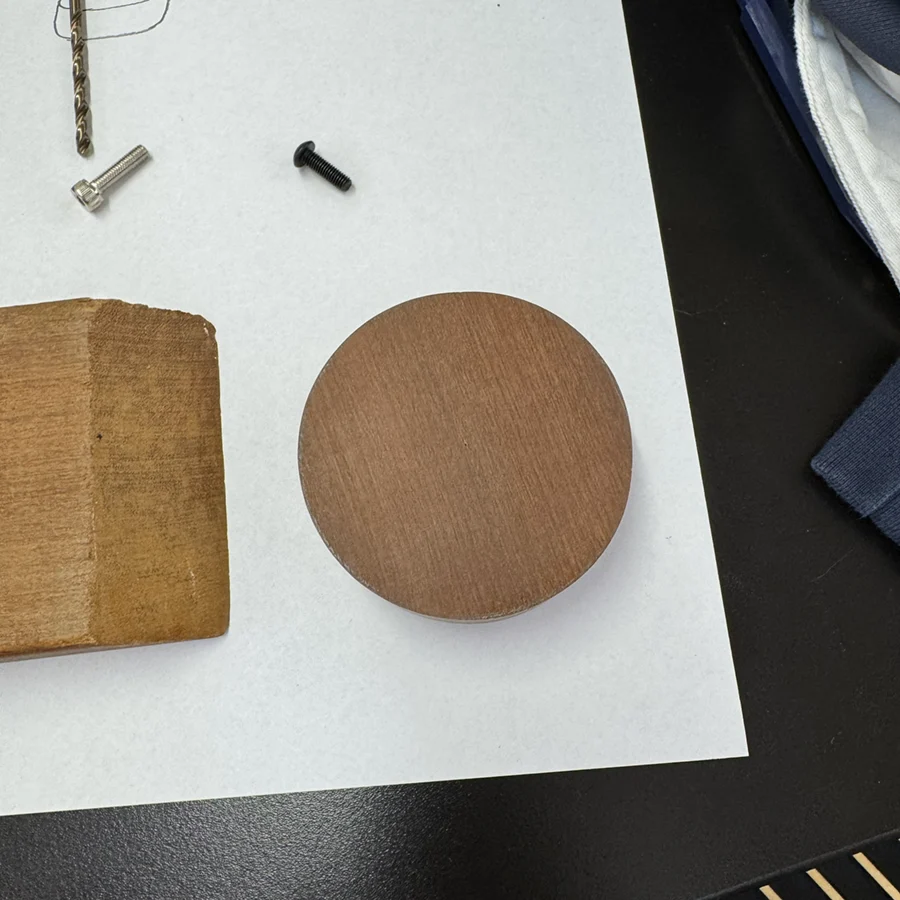
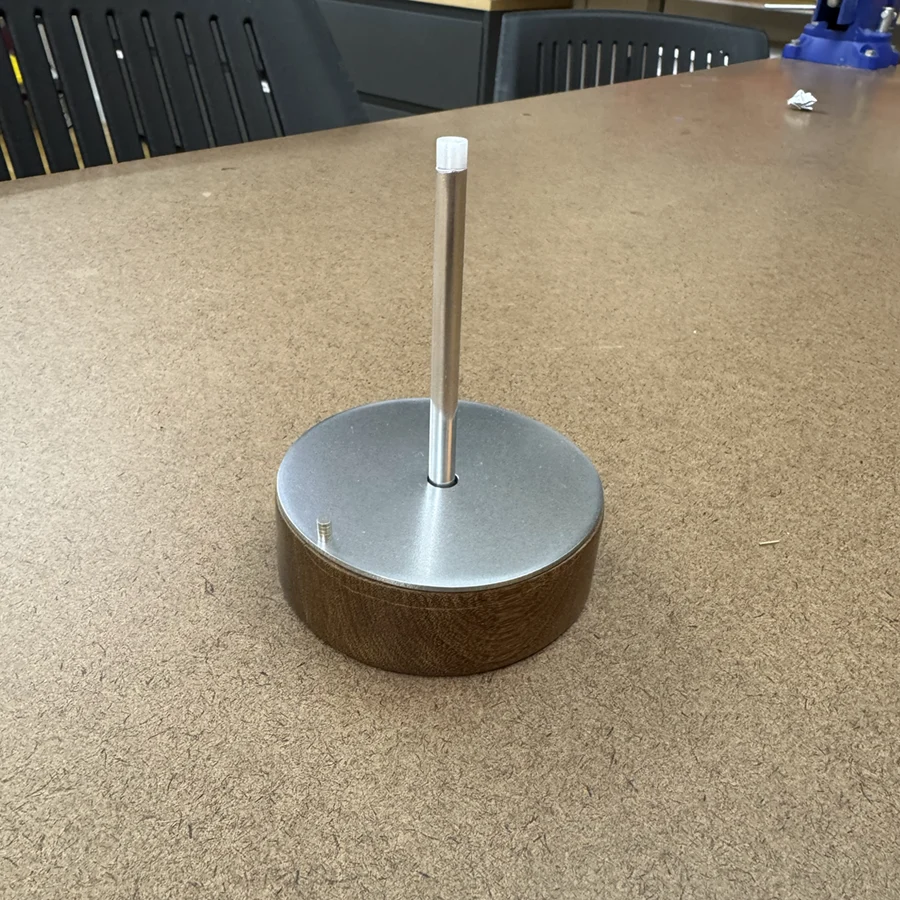
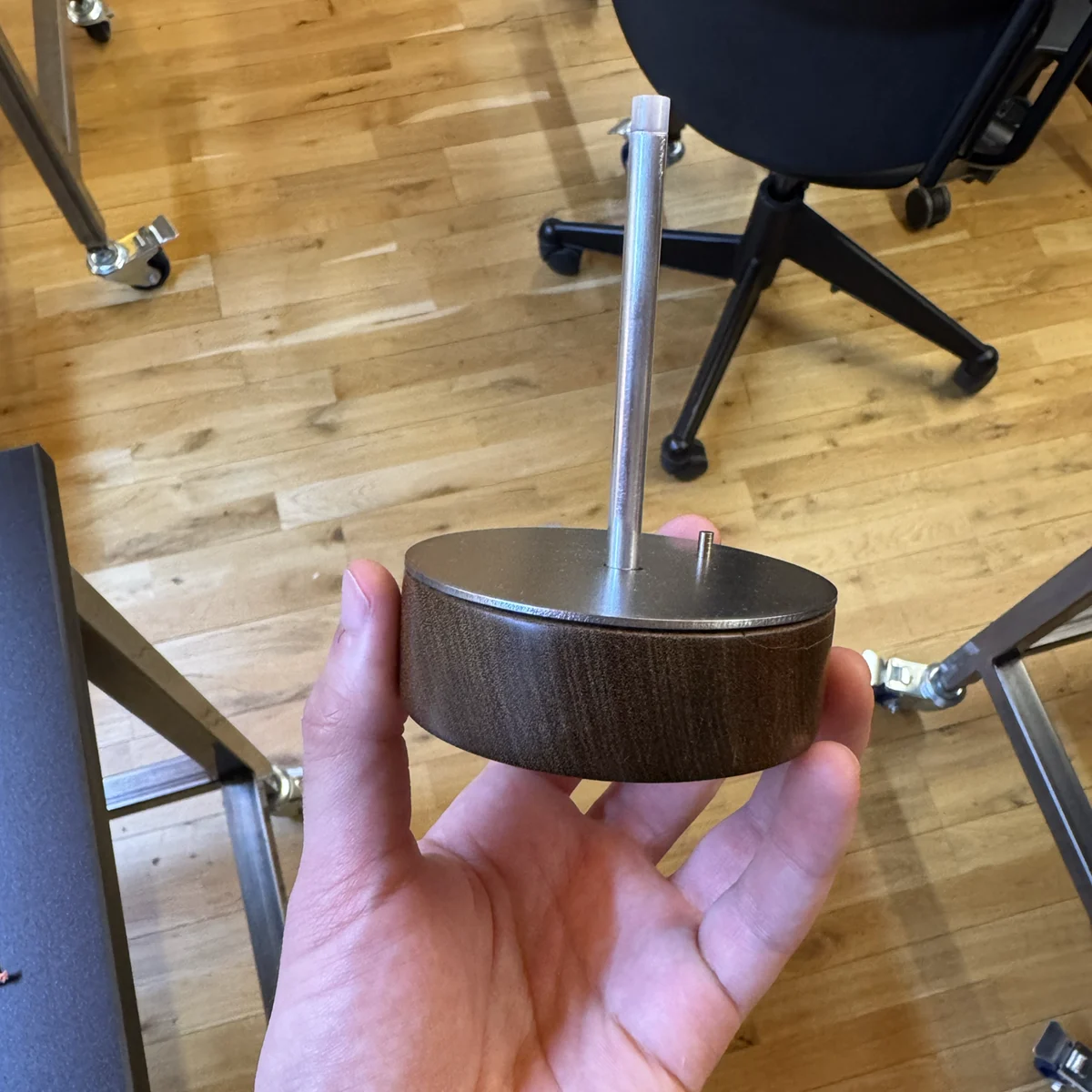
After researching sundials, I realized their geometry is pretty tightly connected to the latitude in which they are placed, as well as the direction of true north. This makes sundials too site-specific and require some calculation to set up properly, which I don't really enjoy.
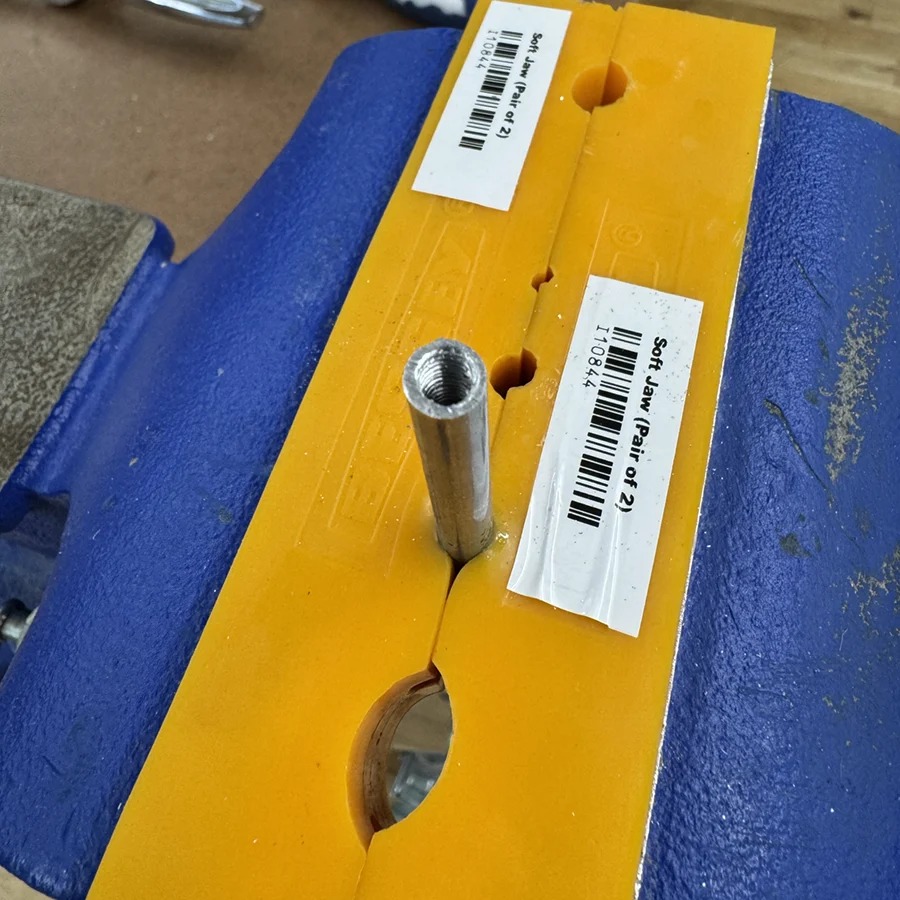
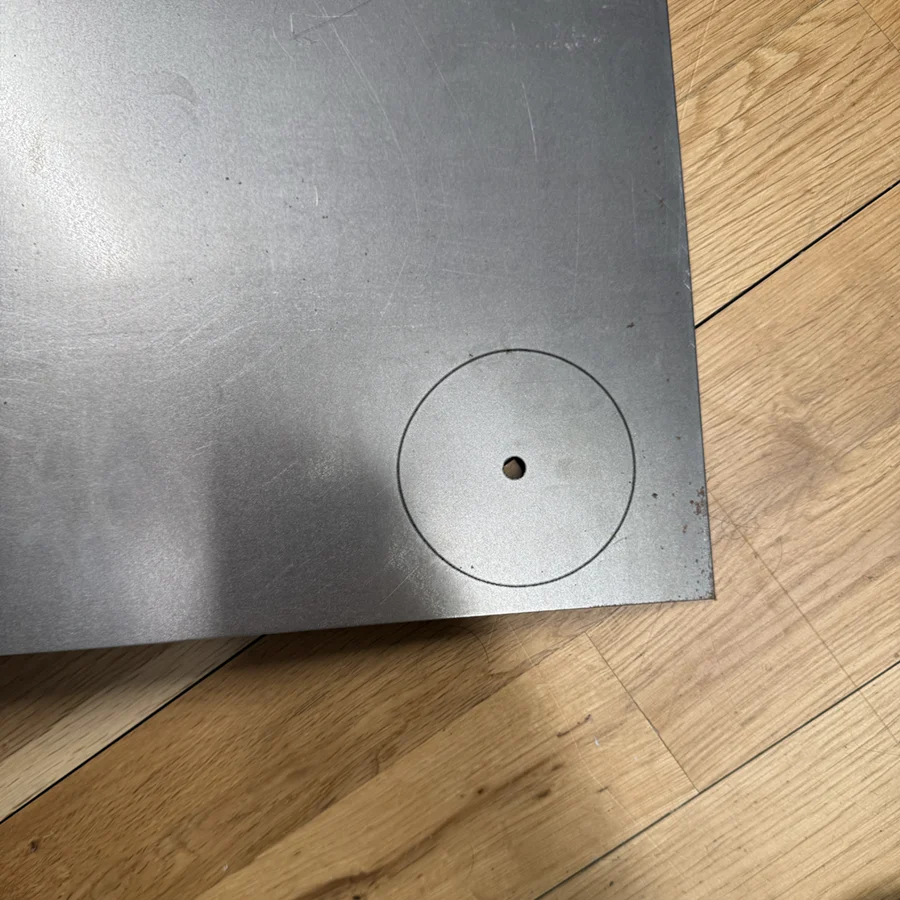
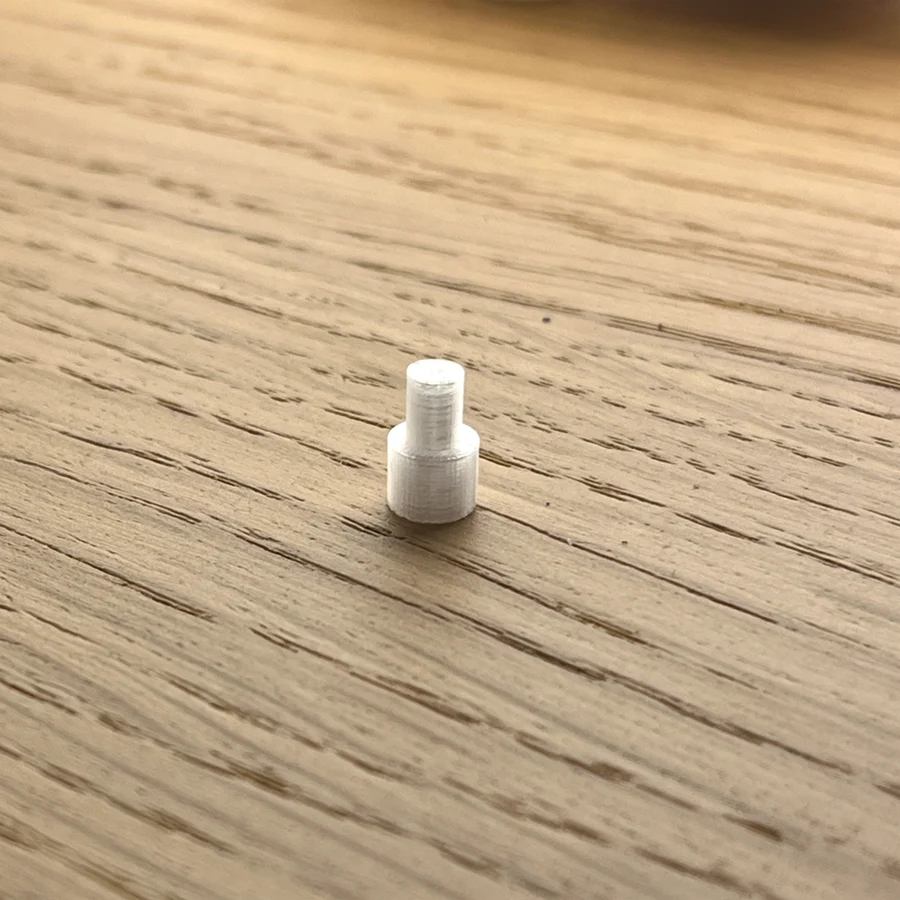
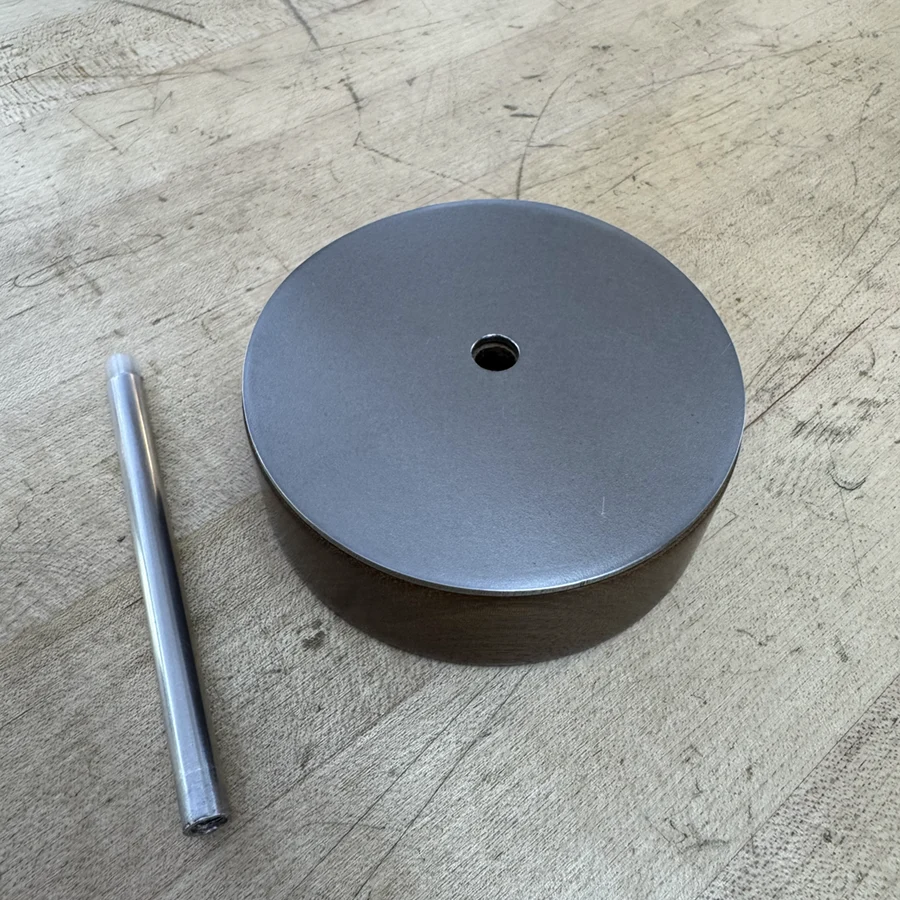
So I decided to make a sundial that is modular, in the sense that the user can add their own hourly markings based on the shadows they see. This way, there's no need to point north and the angle of the gnomon is not a big issue.
Notes on Kairos and Chronos
- It is daunting to think of our responsibility to the future people. Younger generations can often feel that our elders and ancestors did not have that responsibility with us, and it can feel overwhelming to try to correct a course that has been ongoing for longer than multiple of our individual lifespans.
- Slowness feels like a good answer, but by no means a trend. The most recent slowness I remember was the 2020 pandemic, forcing a pause, a slow down. But the ramp up after has been vicious. It feels like we can only slow down and reconsider at the verge of the collective abyss.
- The same situation occurred with rebuilding the ozone, where the Montréal Protocol was set at the cusp of irreversible crisis.
- Slowness feels like an unrealistic expectation, history tends to show that humanity has extremely short foresight, but at the same time, unimaginable effectiveness in the face of imminent danger.
Notes on The Clock We Live On: Following the Sun
- The use of water and weights to measure time is fascinating, especially the clepsydra and the way a float was used very elegantly in conjunction to a rack and pinion connected to a dial.
- The etymology of the minute and second.
- I have heard about so called 'Brothel Candles' or 'Pocket Candles', which burned for 7 minutes more or less precisely. Allegedly used by sex workers but in general used as timers.
- I've also read about Knocker-Uppers, who were employed to wake people up by tapping on their windows with a long stick or a pea shooter.
- The idea that non-military people cared little about time at night is not absolute, especially in Elizabethan time, when "night-time slumber was divided into ‘first’ and ‘second’ sleeps, separated by a time when people would wake up and take part in activities such as socializing, reading, or praying." (source)